Palma de Mallorca

With the summer ending I decided to throw caution and all fiscal responsibility to the wind and slip in a quick 48 hour visit to Palma.

The only thing disappointing about it was that I couldn’t stay longer. The climate was perfect, hot at the start of September, but with a nice sea breeze coming from the beautiful but quite bougie marina.

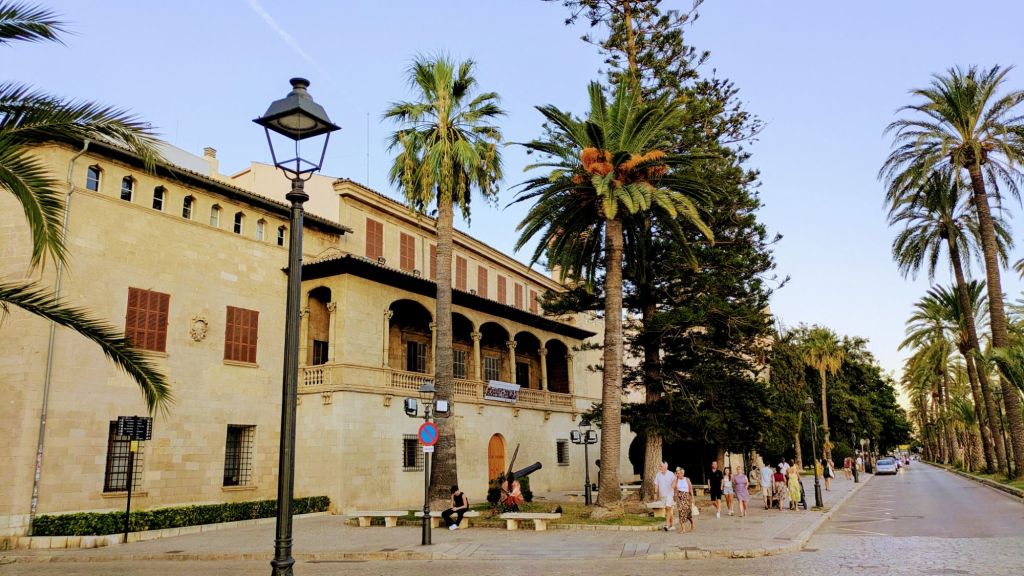
The old town has some spectacular honey coloured sandstone buildings, the most impressive of which is the cathedral. (Quick traveler tip, check opening times as the latest entry on the Saturday afternoon we visited was 2.30pm). You can also buy tickets online to avoid the queue at busy times. The ticket also gives access to the bishop’s house beside the cathedral.

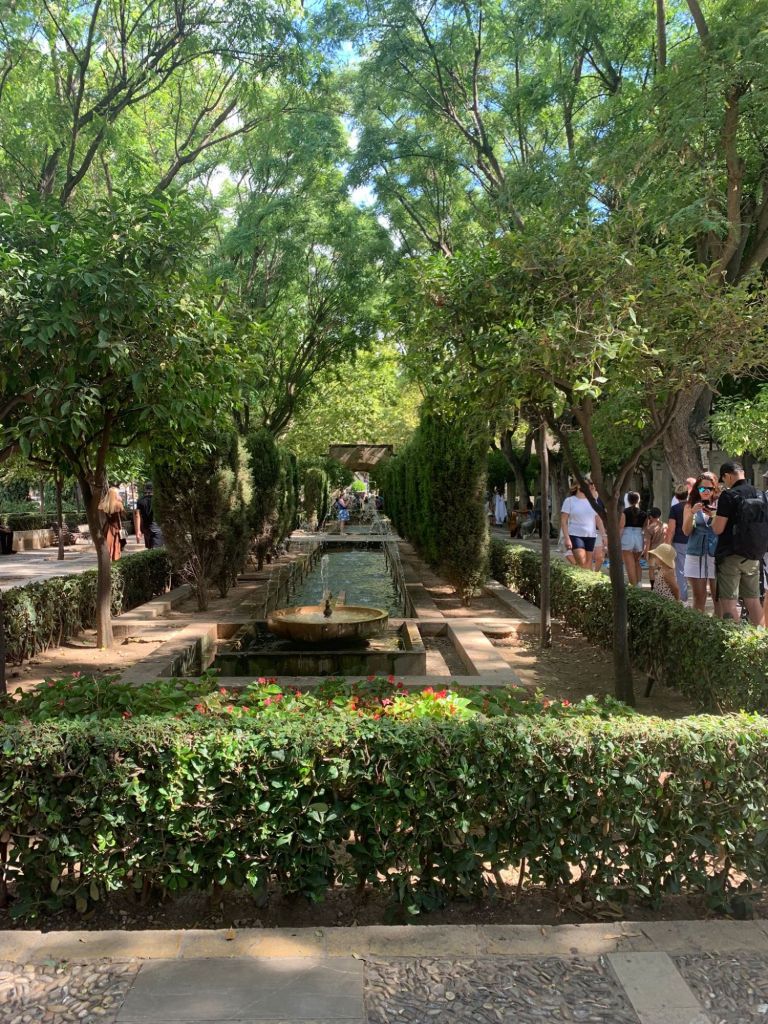
Why not squeeze in a little bit of culture, you can visit several Joan Miro exhibitions, he lived in Palma for several decades. I visited one the free exhibitions of sculptures (all the signs up saying don’t touch the sculptures just triggered my impulse control issues and made me want to do it more). The building itself was like a work of art. Situated in shaded square, lined with bars/restaurant were you can enjoy a glass of wine and some tapas. It was a very pleasant way to slip from afternoon to evening.
Palma is more of a working town than resort and you’ll see fewer tourists than in resorts along the coast, but English is widely spoken, which was useful as my rudimentary Spanish escaped me whenever anyone asked me a question.
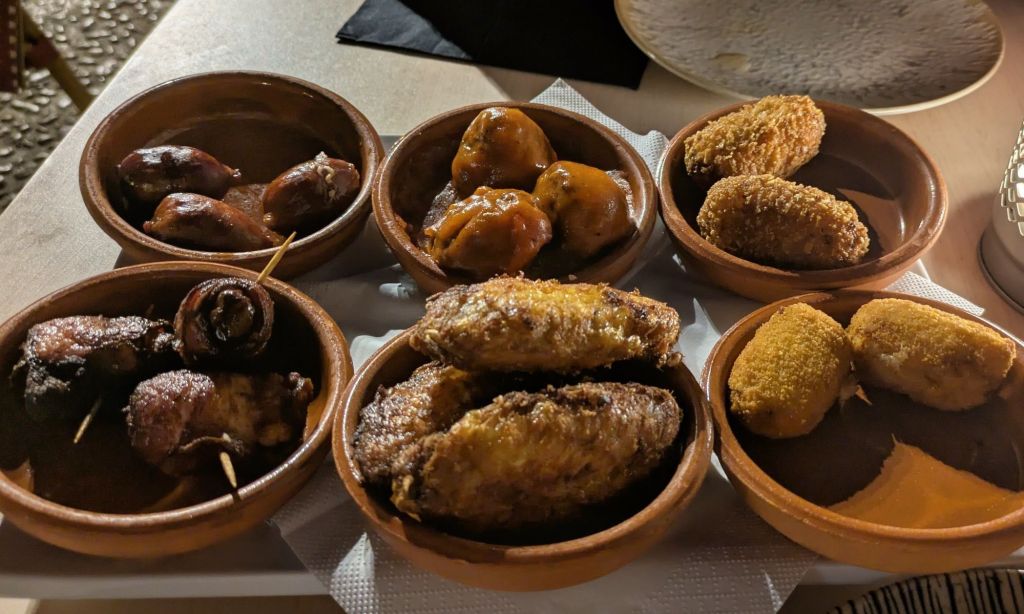
Traditional Mallorcan food is hearty and they are very fond of meat and of different pastries, the most recognisable is the Mallorcan ensaimada. This is a super light spiral of pastry topped with icing sugar and can also come filled. A word of warning if you’re vegetarian, most pastries are made with pig lard, so it might be worth checking before you buy.

Good food and drink are easy to find, although prices are probably on a par with the UK. Its definitely more expensive than mainland Spain, but most islands are a bit more expensive due to the cost of having to import everything. Palma has a high-end feel. If you look at the price of real estate in the town, you’ll see why.

Local rabbit with a delicious but super pungent garlic and herb sauce.

After a glowing recommendation from a work mate we took a cute little wooden train to the town of Soller https://trendesoller.com/eng/whattosee/soller

The train journey takes about an hour from Palma to Soller. It takes you overland past lemon and olive groves. The return fare costs 40 Euro. Soller is very quaint with a laid back Boho vibe with lots of cool artisan shops and surrounded by lovely countryside.
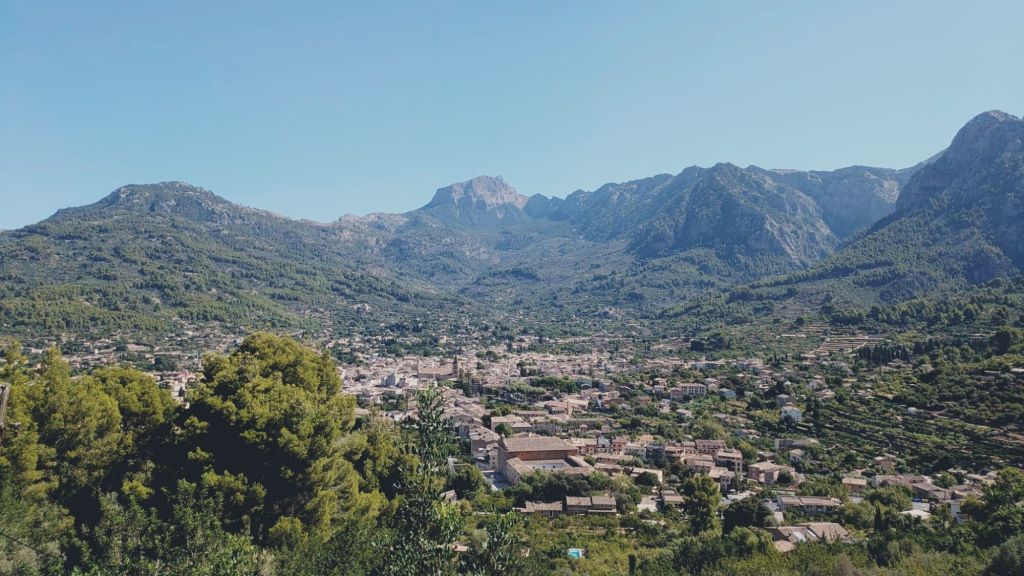
From the town square you can take a wooden tram out to Port de Soller which takes about 20 minutes. This is a gorgeous crescent shaped bay with a light house, marina and plenty of places to eat, drink and shoP. There is a good beach where you can hire a spot under thatched parasols with 2 sun loungers for about 18 Euro. Unfortunately I had a brain fart that day and didn’t charge my phone enough, so can’t post photos, but check the link attached and the pictures they use are accurate. I would definitely visit both Palma and Soller again and allow more time to enjoy them properly.
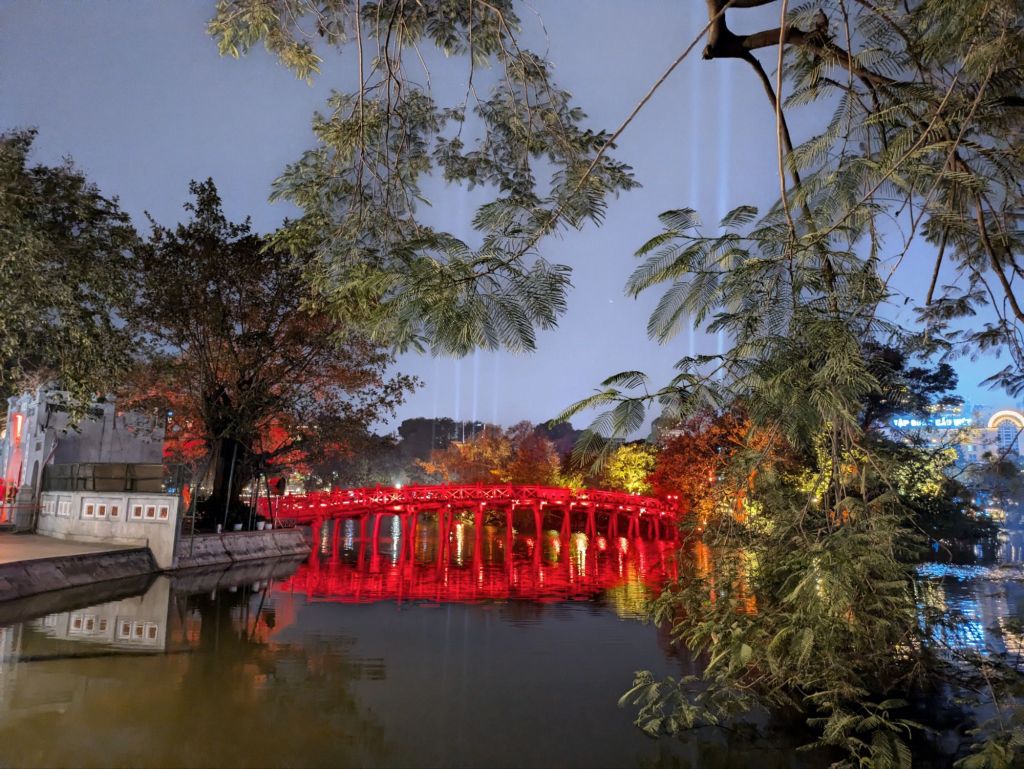
Hanoi – Vietnam

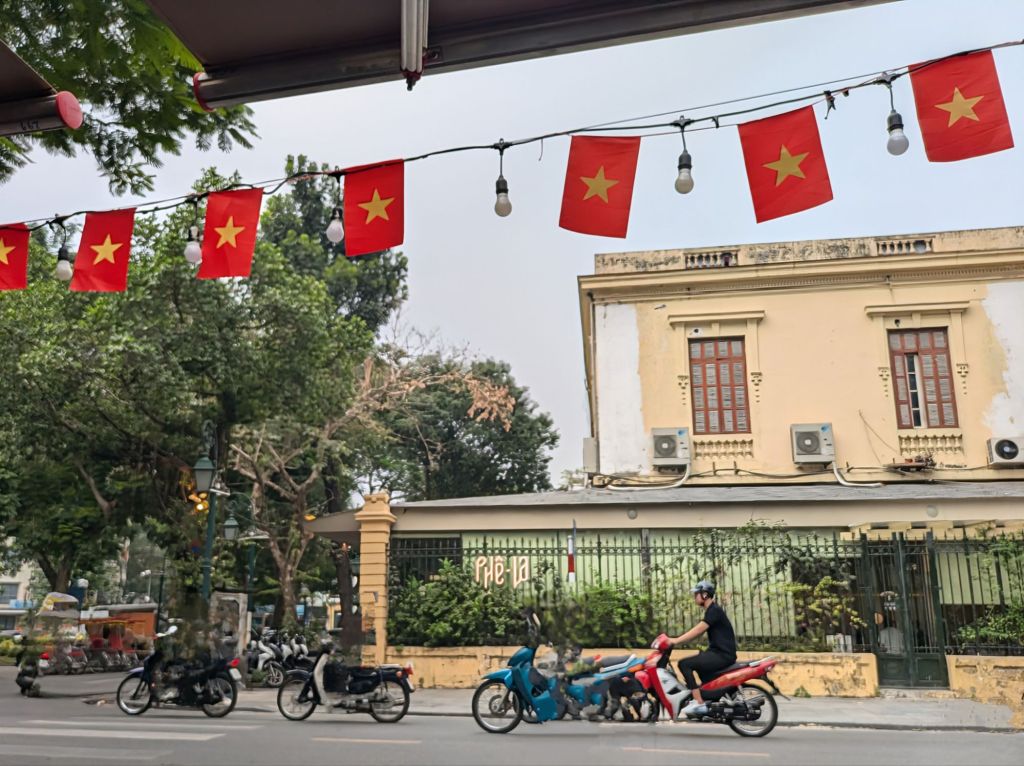
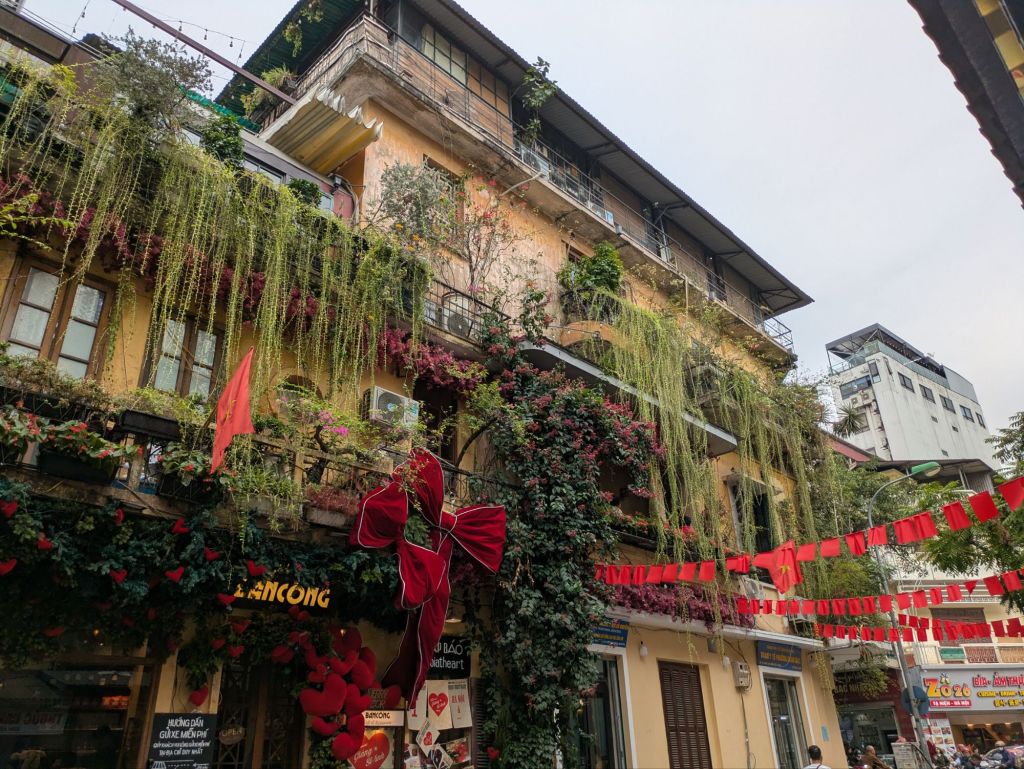
I’m not going to be coy, I absolutely loved Hanoi.

I didn’t know a huge amount about Hanoi or Vietnam so wasn’t sure what to expect (which is probably the best way to visit a place).

That being said Hanoi has a serious smog problem, so if you have serious respiratory issues, definitely wear a mask and keep an inhaler handy.  The city is home to more than 8 million people and has at least 6 million mopeds.  The country is working on building their own electric vehicles but the cost makes these inaccessible to most people. 

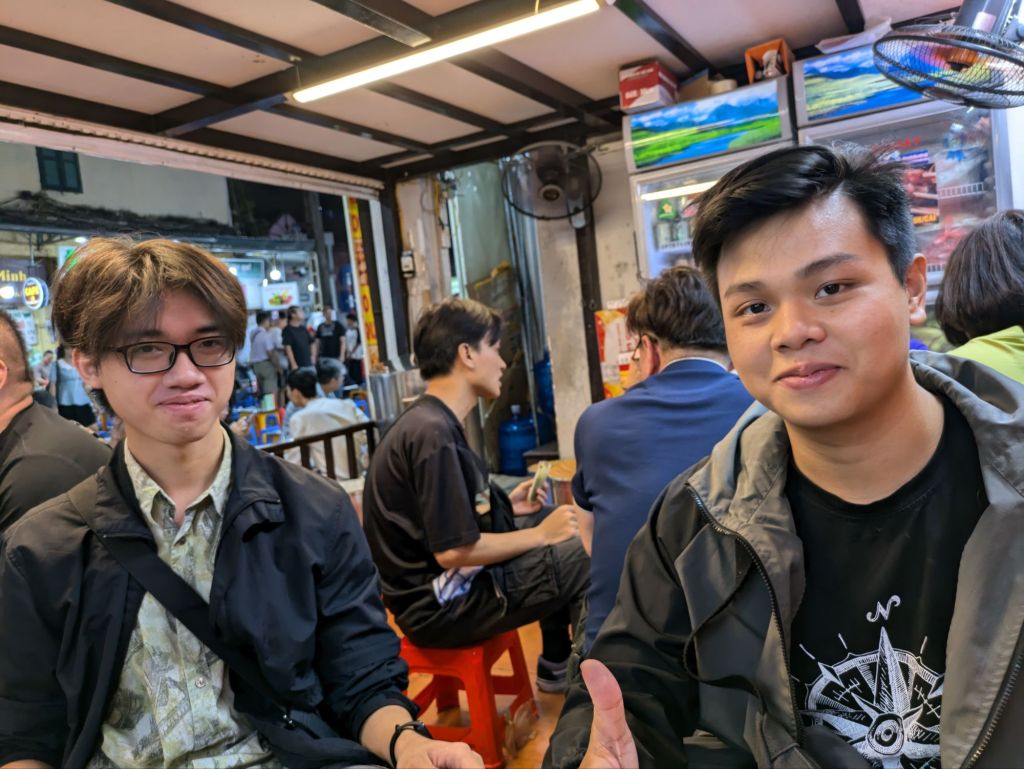
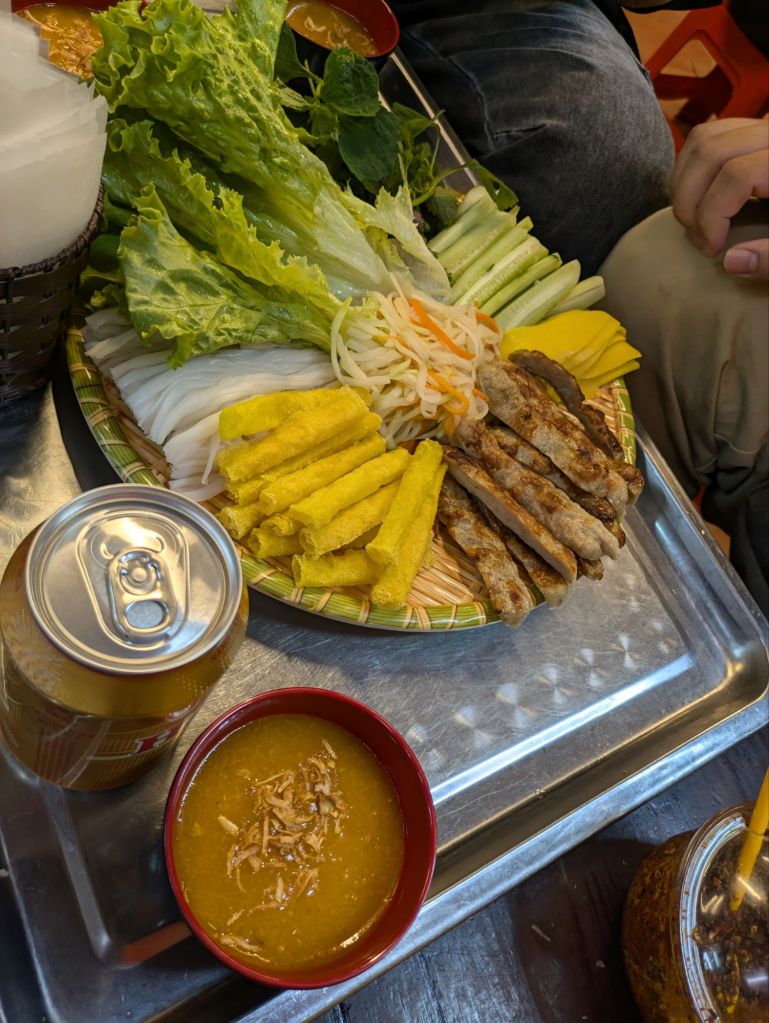
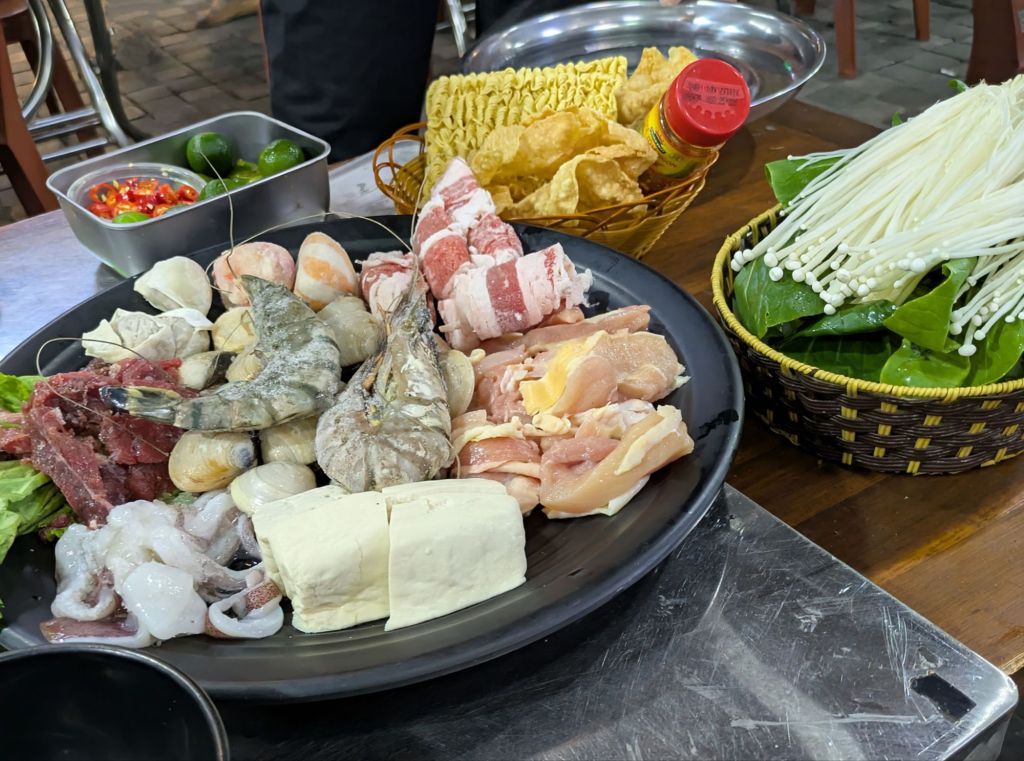
If you want to learn more about the food or culture of the city I would definitely recommend  getting in touch with Hanoi Kids, http://www.hanoikidsorg  This is a non profit organization where college students meet up with you and can show you around based on what your interests are (and also gives the students a chance to practice their already excellent English).  We met up with 2 fantastic students Tom and Noonn who were great company.  I wanted to know more about the city’s food scene and they took us to places we would never have ventured (I’m talking up back alleys to eat delicious Pho at the back of someone’s house).  There is no formal charge for this, but you should tip your guides well as they do an excellent job and this goes back into the club.

They also introduced me to Vietnamese egg coffee.  The thought of egg and coffee in the same cup didn’t sound too appealing, but it’s definitely worth trying (and doesn’t taste eggy).  It was invented after the war when dairy was scarce.  The coffee is almost a mousse and would remind you of tiramisu and the cup is served in a bowl of hot water to keep it warm.  Coffee with condensed milk is also popular and Vietnam grows and produces excellent coffee.

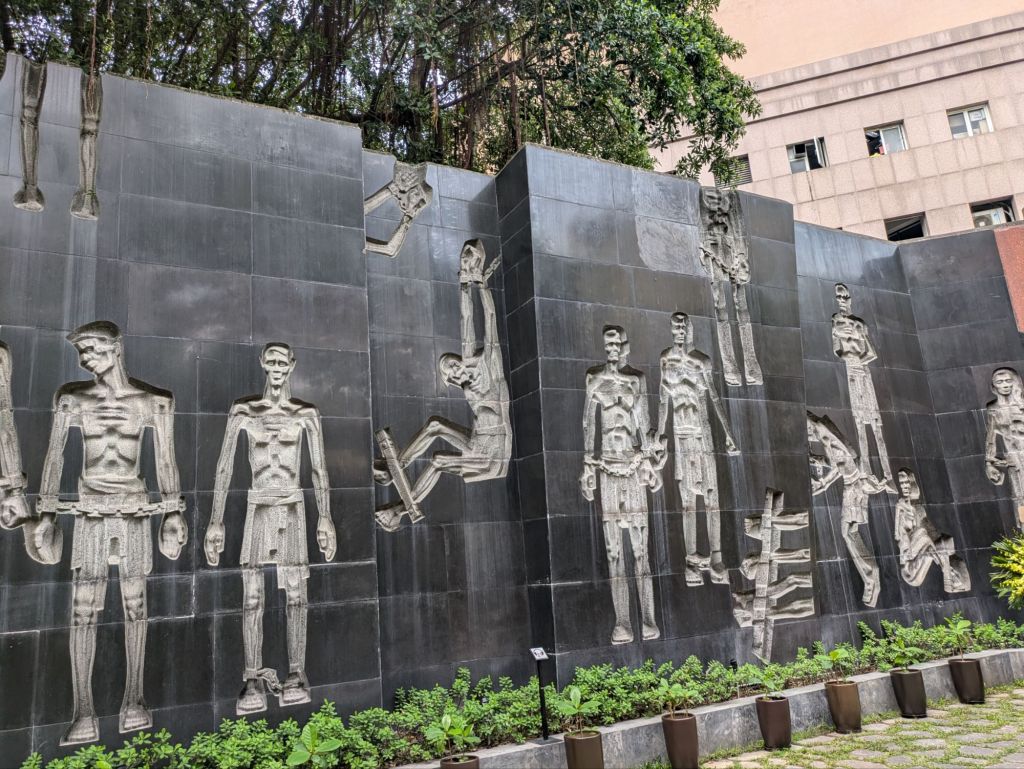
The city is full of history, and the Hao Lo prison should definitely be on your itinerary.  The prison was formally known as the Maison Centrale, and was a large foreboding prison expanded by French colonial forces when they invaded the country in the late 19th century.  Needless to say the French did some very bad shit and the Vietnamese people were treated appallingly while fighting for independence.  Being able to stand in the cells, see the guillotine used and hearing first hand accounts from prisoners brings a very dark period to light and shows the bravery and resilience of the people.  The prison was also known as the Hanoi Hilton and was home to captured US military pilots in the 1960s and early 1970s.  The exhibition showed some of the military personnel from both countries working together since the war to help identify and repatriate those who died in an attempt to reconcile the past.  This was a very moving place to visit and gave a good background on Vietnam ‘s more recent history.

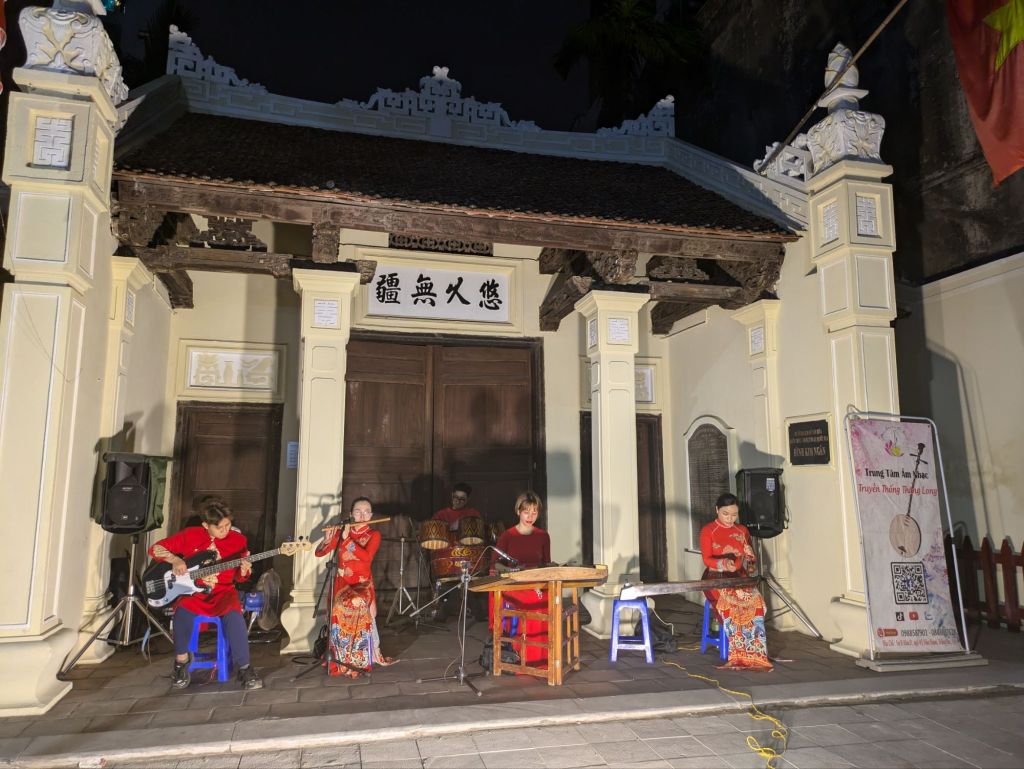
If you feel like a slightly lighter visit, the Thang Long Imperial Citadel is also worth a visit.   Located in central Hanoi, the citadel dates back to the 10th century and was home to different dynastic royal families and imperial administration.  Historically, doctorates and laureates were awarded at the citadel, so when we visited a lot of high school kids were graduating and it’s traditional to visit the site.  There were also several school field trips with younger kids visiting who were exceptionally sweet and well behaved, shouting hello and waving to us.  Education and literacy are extremely important to the Vietnamese and you will see book shops everywhere.

While the city is large, if you base yourself in either the old or French quarter you will probably be within walking distance of most of the sites worth visiting.  The area around the Thang Long lake is pedestrianised at the weekends and you’ll find families out with young kids enjoying street entertainment and night markets and it is a great way to kick back and enjoy the city.

 If you’ve had enough walking but aren’t going to far, you can also take one of the bicycle rickshaws you’ll see across to the city.   I’m still going to recommend using the ride service GRAB (not sponsored by them, but open to it).  You can use this to book a taxi, or hop on the back of a moped at a cheaper rate (no amount of money would pay me to do this, as traffic signals seem to be little more than a suggestion).

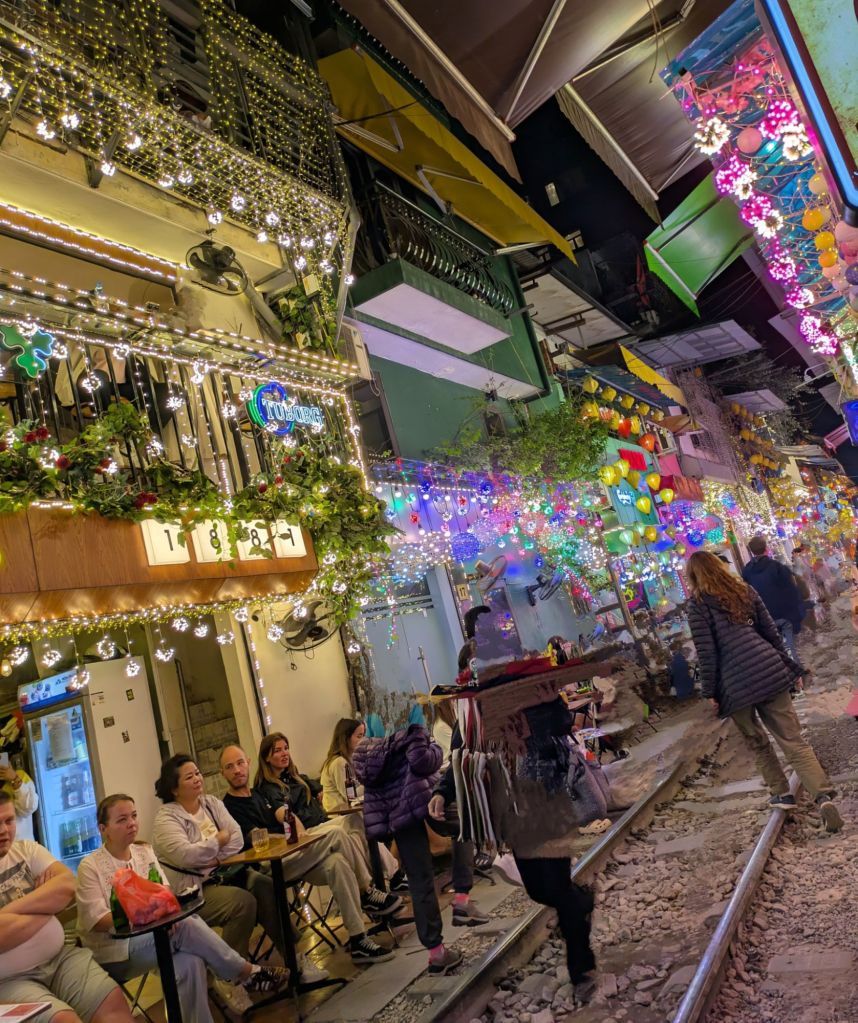
No visit to Hanoi would be complete without a visit to Train Street.  It is literally a narrow street lined with bars and cafes where you can watch a train cut right through the middle of the street.  It’s great fun and worth dropping by when a train is due and the surrounding streets also have great places to eat and drink.  Small low seats and tables right on the street are normal, but you can also find higher seats easily enough.

Hanoi is excellent value for money if you’re on a budget and you’ll enjoyed meeting the people who were warm, funny and friendly.

Bangkok – Thailand

I had never been to Bangkok before and the adjectives for it are enormous, crazy and scorching hot.

It’s a city of massive contradictions.  The traffic is like nowhere I’ve ever seen.  Apparently it has the second most congested traffic in the world, with more than 4.5 million people living in the city.  We spent over 2 hours trying to go 4 kms in rush hour.

There is public transport including an MRT train line, buses and the ever present tuktuks.  If you haven’t been on one before they are great fun on a night out, with bright neon bands and music pumping.  They are also slightly terrifying as the drivers also have a blatant disregard for the rules of the road, and I swear one went up on two wheels when we were going around a corner.  Like with taxis, a good tip is to agree a price before you set off.

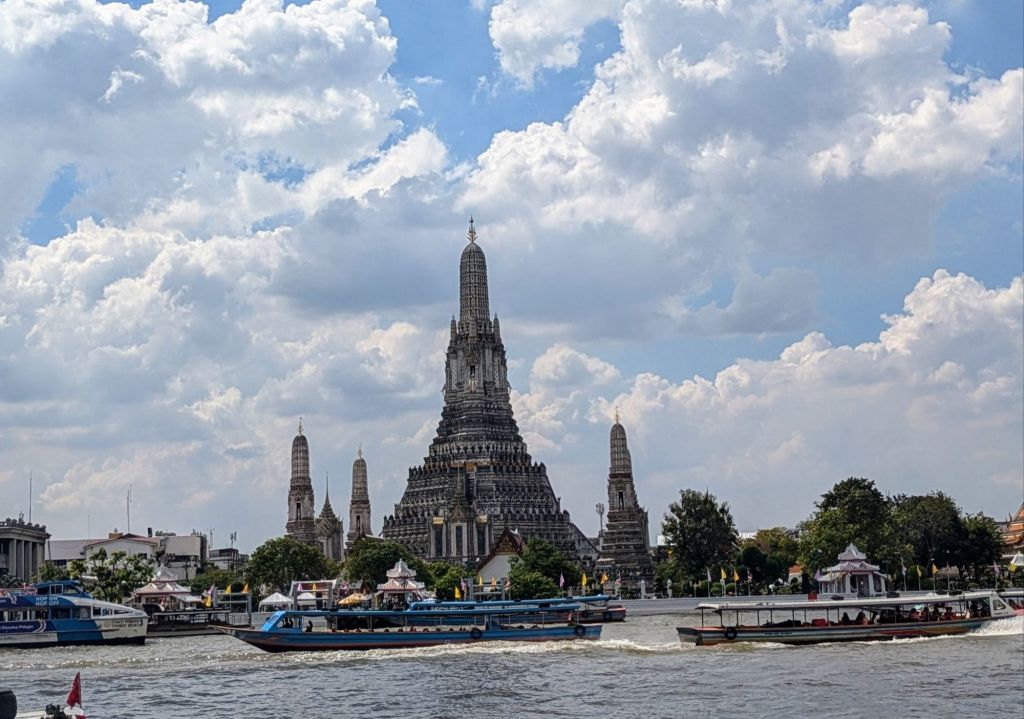
You can also get to where you need to go along the water, with ferries and river taxis being cheap and frequent.

You’ll be surrounded by food wherever you go, and you can’t walk more than a couple of metres without finding a food stall providing cheap and tasty food of every description or cold drinks that you will definitely need.  The food from the food stalls was great and cheap, as always look for stalls where the locals are eating and have a good turnover, and don’t get cocky with the chillies they are wickedly hot.  I guarantee you’ll become addicted to the mango and coconut sticky rice sold everywhere.

I was staying near the ICON SIAM Mall and if you want to enjoy a variety of Thai food with some air con it has one of the best and prettiest food courts I have ever seen, with sections offering food from each region of Thailand, as well as food from other Asian countries. You can also pick up pretty cool food related gifts here too.

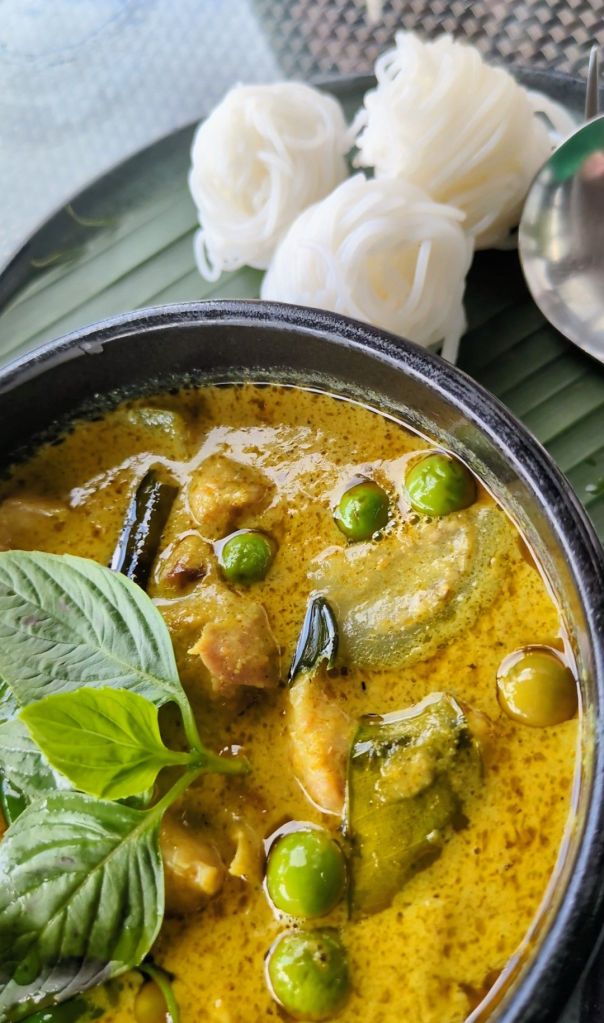
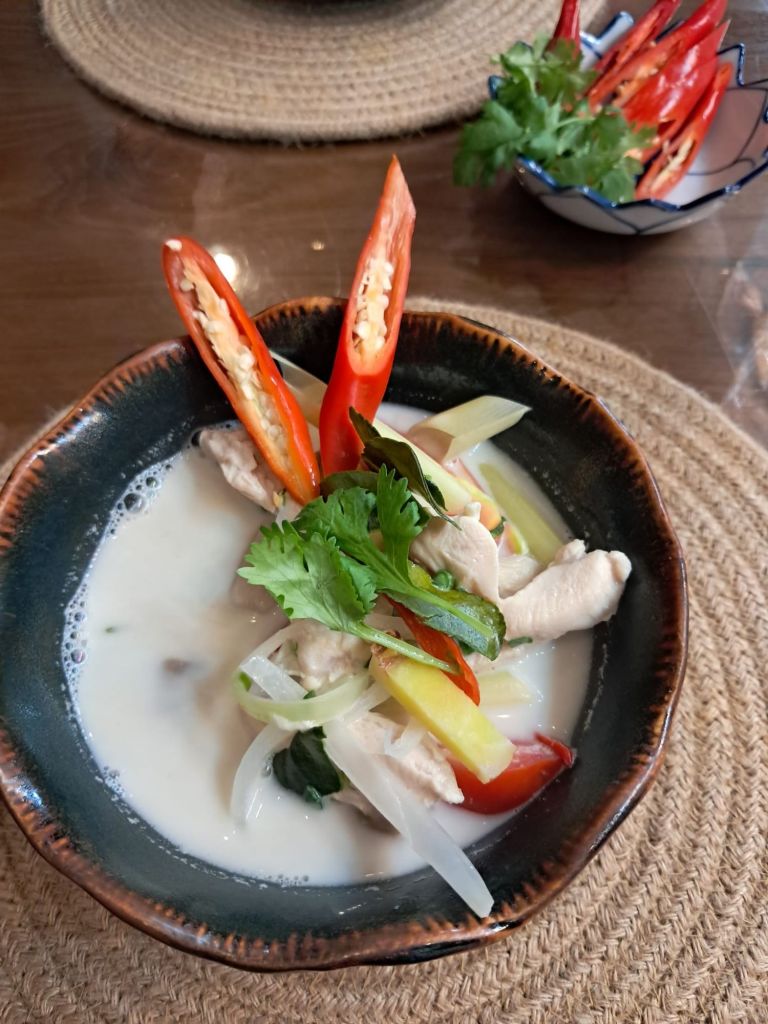
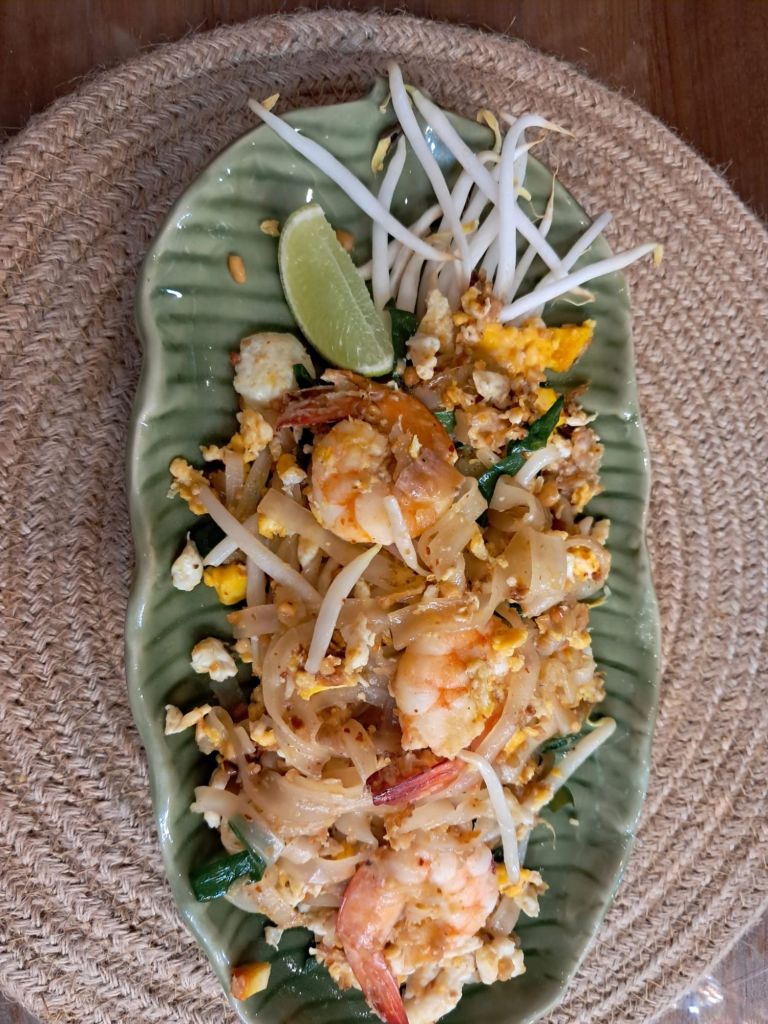
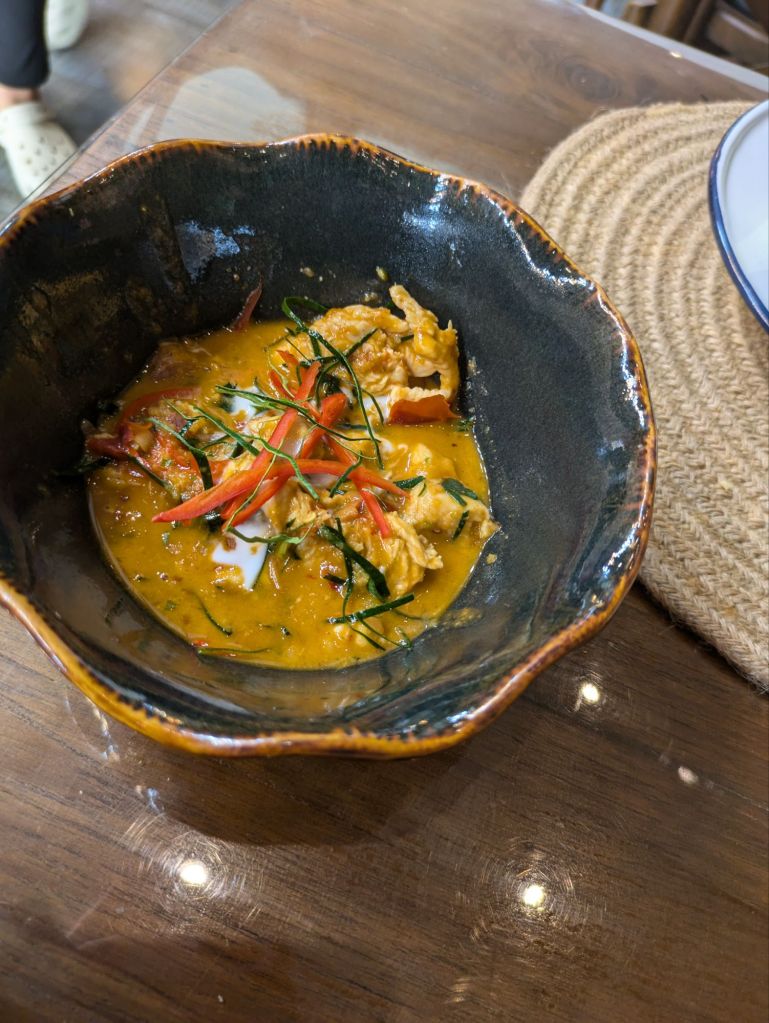
As a keen cook I treated myself to a morning learning to cook Thai dishes and included a visit to a local food market and tuktuk ride back to the cookery school.  Ping, at the Sabeing cookery school was our guide/instructor and gave lots of really is interesting information about Thai cuisine and ingredients and if you get a chance to visit Bangkok I would definitely recommend it.

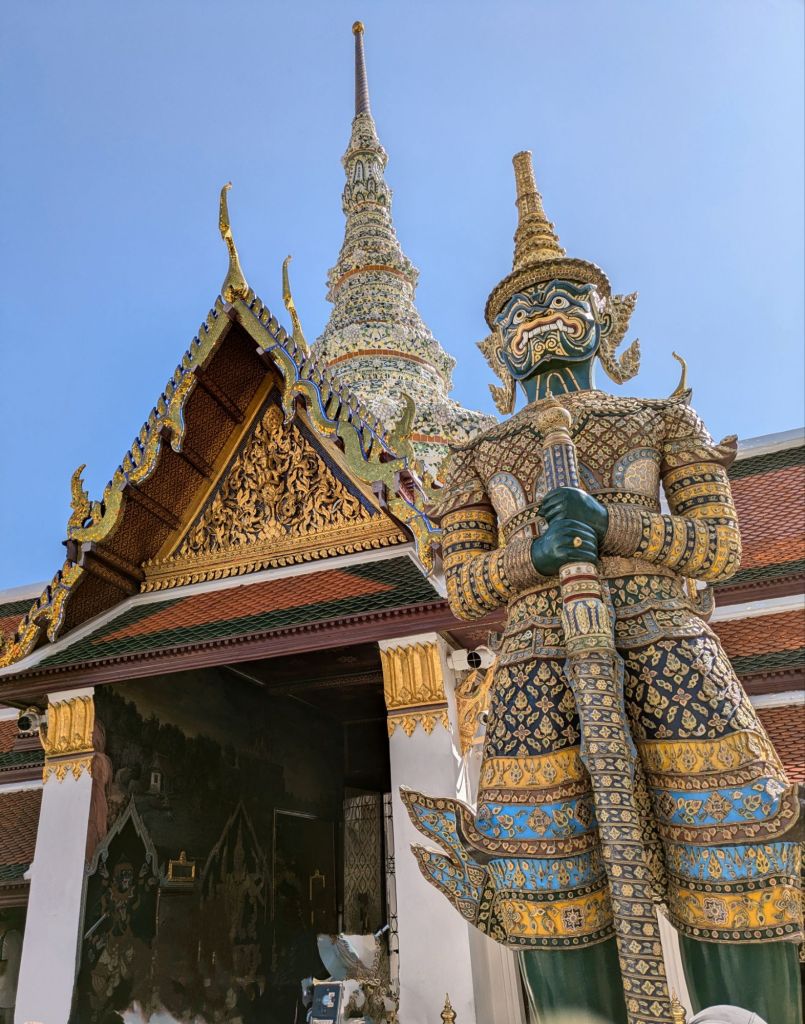
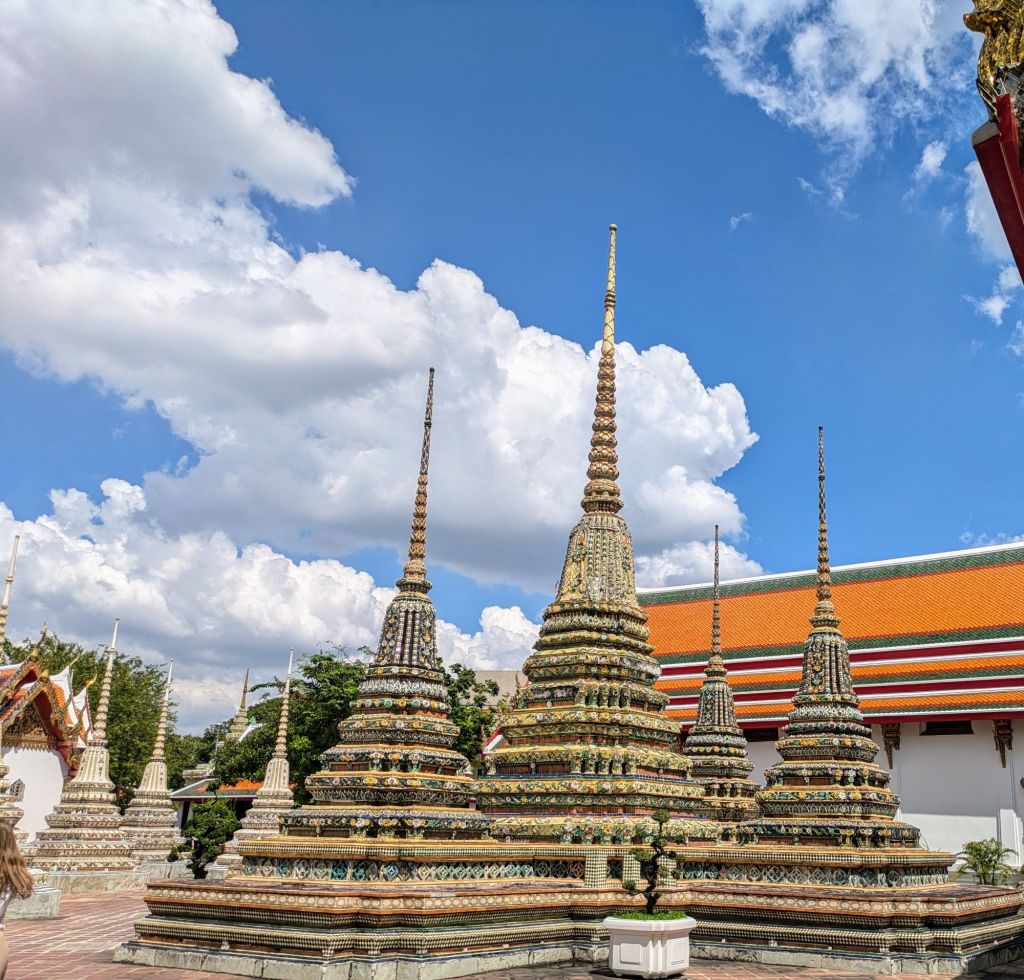
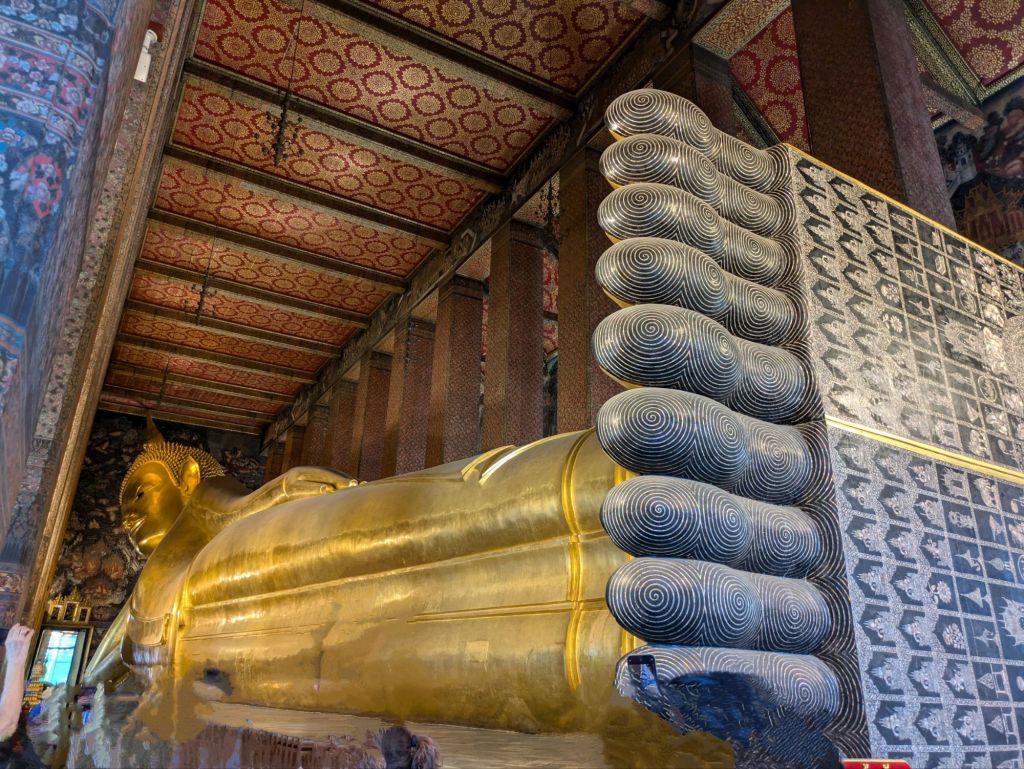
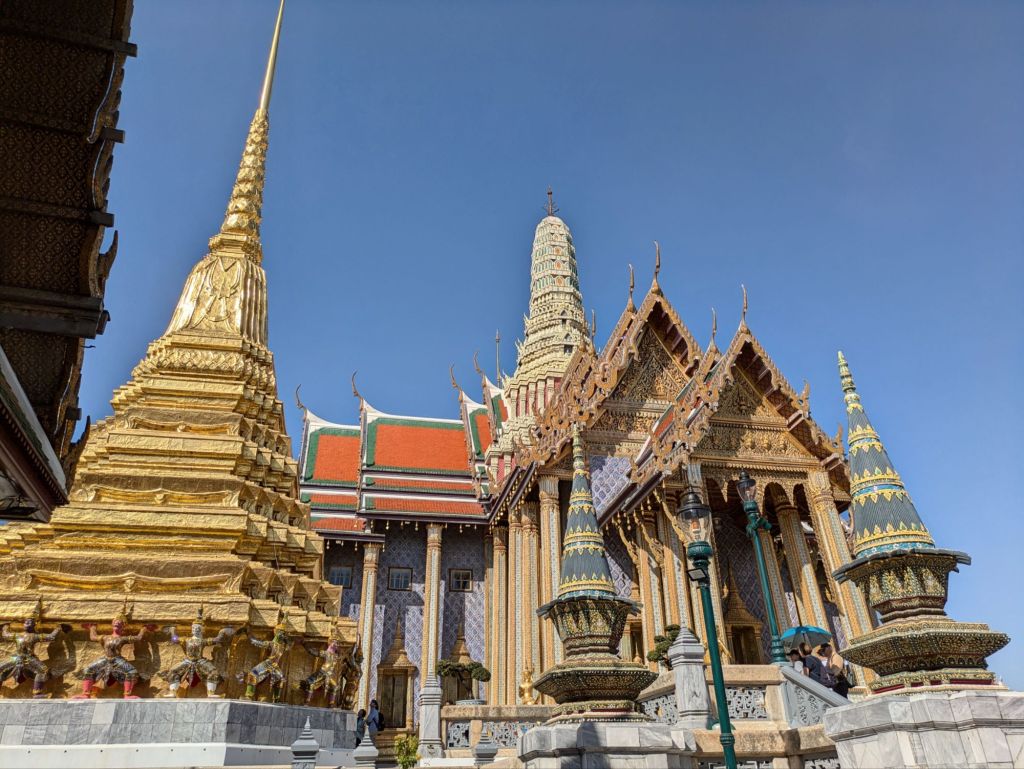
As a kid I was enthralled by the movie, ‘The King and I’  (I only learned recently that the Thai people are not fans of the film, and in hindsight I can understand why it is problematic) but still wanted to see the royal palace, which did not disappoint.  Richly decorated and full of history, it was everything I hoped it would be.  I also walked another 10 minutes along the river to Wat Pho, the temple is the site of the giant reclining Buddha.  (Quick traveller tip, on the way to Wat Pho you may be approached by tour guides telling you the site is closed today, but they can show you other sites, this is usually a scam)

 Like most sacred sites and in the palace you’ll be expected to cover up if you’re showing too much skin, and behave respectfully.    Within the grounds of the temple there is a massage school, and if you’re tired from site seeing, this is a perfect chance to rest and have an exceptional massage for around £10.

I would recommend everyone to treat yourself to an authentic Thai massage if you’re visiting, and prices seemed to range from £6-£10.  If you’ve never had an authentic Thai massage before you’ll probably be asked to change into loose pyjamas and you’ll lie on a low platform often in the same room as other patrons.   Then a very sweet smiley lady about the size of a nine year old boy will twist you like a pretzel and work you over like you owed her money, using her hands, elbows, knees and feet.  Don’t be surprised if they kneel on you, digging both their knees into your butt cheeks. However, stick with it because you’ll feel like a million dollars after it.

Bangkok is famous for its night life, and if you’ve ever watched The Hangover 2, it’s totally within the realms of possibility that some people could go totally wild.   I didn’t get a chance to visit Kaoh San Road (which by all accounts is the place to go if you’re interested in hard-core partying). I did visit the Pat Pong night market which was good for knock off clothes and tourist tat.  It also has a pretty vibrant bar scene.  Some hostess bars had worrying young looking girls enticing customers in (I’m trying not to be judgmental, as I was talking to a young Thai woman at my hotel who looked about 11 but was actually 22).  Street touts will also try to encourage you into drag shows  and “ping pong” shows (and we’re not table tennis!)

Bangkok is pretty hectic, but you should definitely be able to find something you’ll love whether it’s food, shopping, nightlife or history and culture.

Singapore -Simply Sensational

You know you’ve landed somewhere pretty special when even the airport has a waterfall, monorail and butterfly garden.  It’s also amazingly well run, efficient and pleasant to travel in and out of.  It’s a no announcement airport so it’s surprisingly calm without constant intelligible “bing bong” announcements so it’s important to check your flight details.

If you haven’t visited Asia before Singapore is an excellent entry way.  As a former British colony English is widely spoken, signs and announcements are also in English (they also drive on the left hand side of the road).

The city itself is a beautiful mix of historic buildings and iconic skyscrapers.  It’s a lot greener and less frenetic than cities like Hong Kong and Bangkok.  It is also an important financial and business and hub, and it’s clear there is also a lot of money floating about the place. But the city also has a fascinating history and has been a crossroads for multiple cultures. 

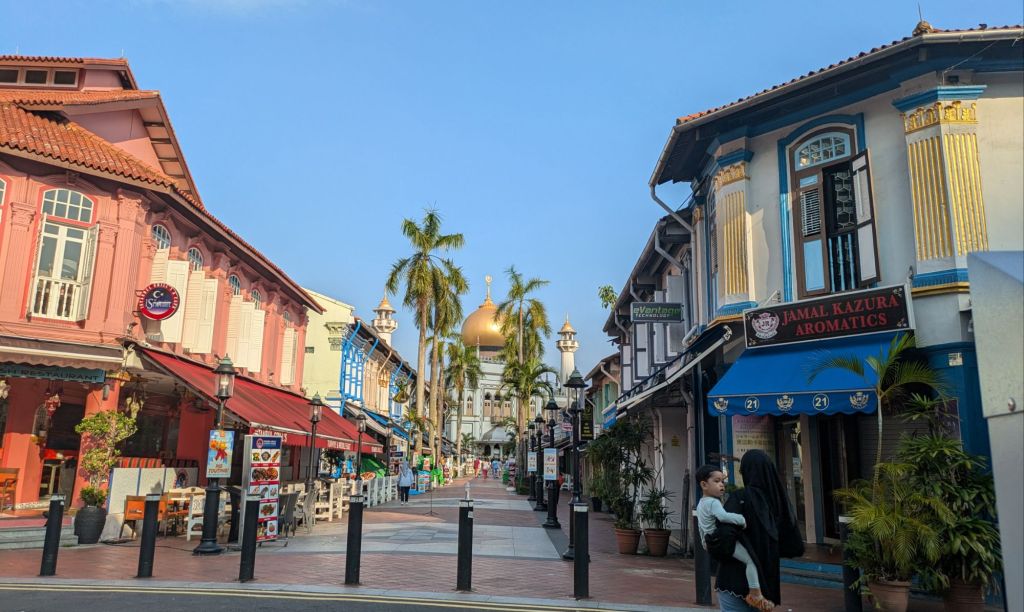
The local indigenous population refer to themselves as Hainese.   Throughout the city you’ll find other communities like Arab Street and Hagi Lane where you can find the beautiful Sultan Mosque, where Muslim merchants originally settled and you can find multiple pretty little Turkish, Indonesian and Malaysian restaurants. 

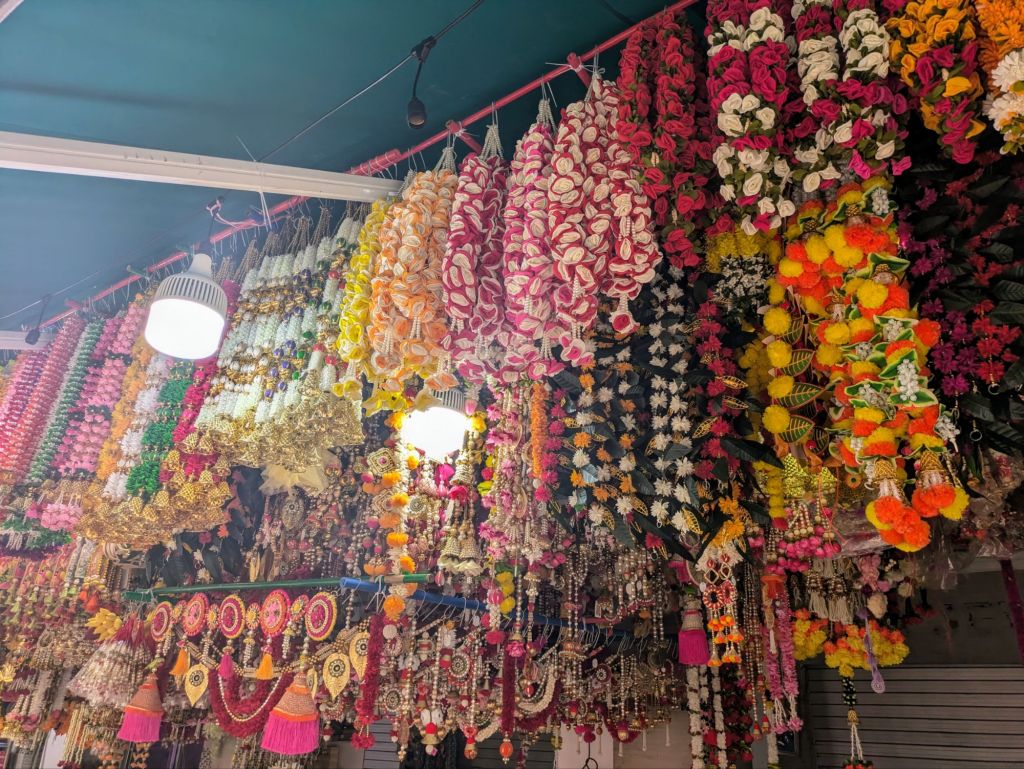
Walk about 10 minutes and you’re in Little India, there is also a sizable China Town, with endless places to eat, a night market and beautiful ornate Hindu temple.

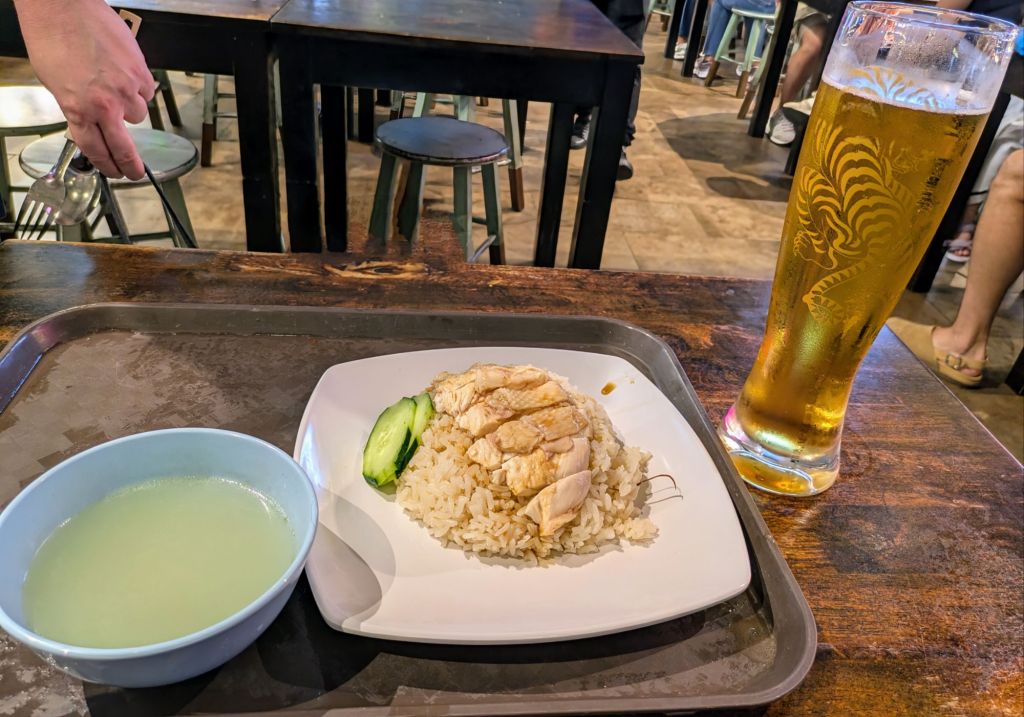
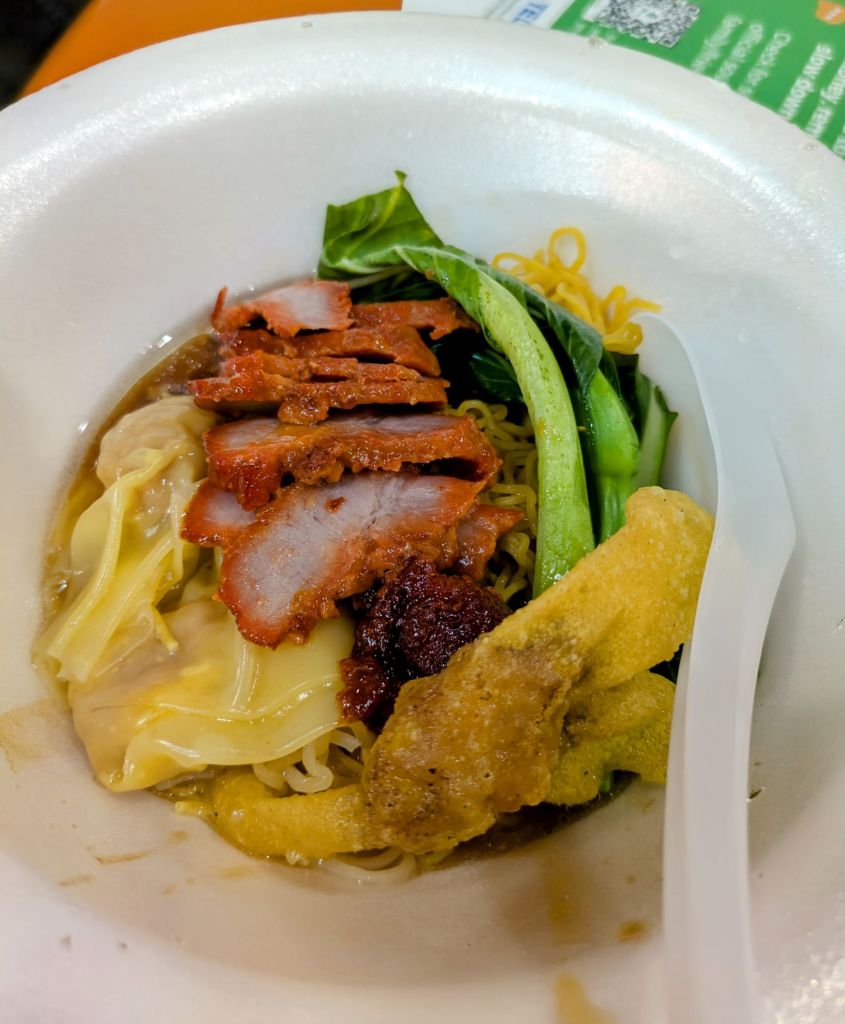
Hawker markets also play an important part in the food culture of the city, producing over 1 million meals daily, as it’s common for locals to eat out daily.  They are essentially food courts where you can buy everything from the local speciality of chicken and rice (poached chicken and rice served with a simple but tasty chicken broth and costs about £3.20), through to other dishes from all over Asia. 

The Lau Pa Sat hawker market was probably my favourite but is popular with tourists, it runs alongside what’s known as Satay Street.  As you’ve probably guessed you can find multiple vendors cooking and selling satay skewers with chicken and  prawn being the most popular, but frankly I thought it was overpriced, with food inside the hawker market being better value.  The Maxwell hawker market in Chinatown was probably more authentic but maybe less fancy.

Singapore is incredibly easy to get around, the airport is only 30 mins from the city centre, and it has an excellent underground railway system (MRT) with fares costing around £1, and you can just tap your debit card going through the turnstile, so no queuing for a ticket.  There is an option for a tourist pass depending on what you’re planning but I found it cheaper to just pay as I went.

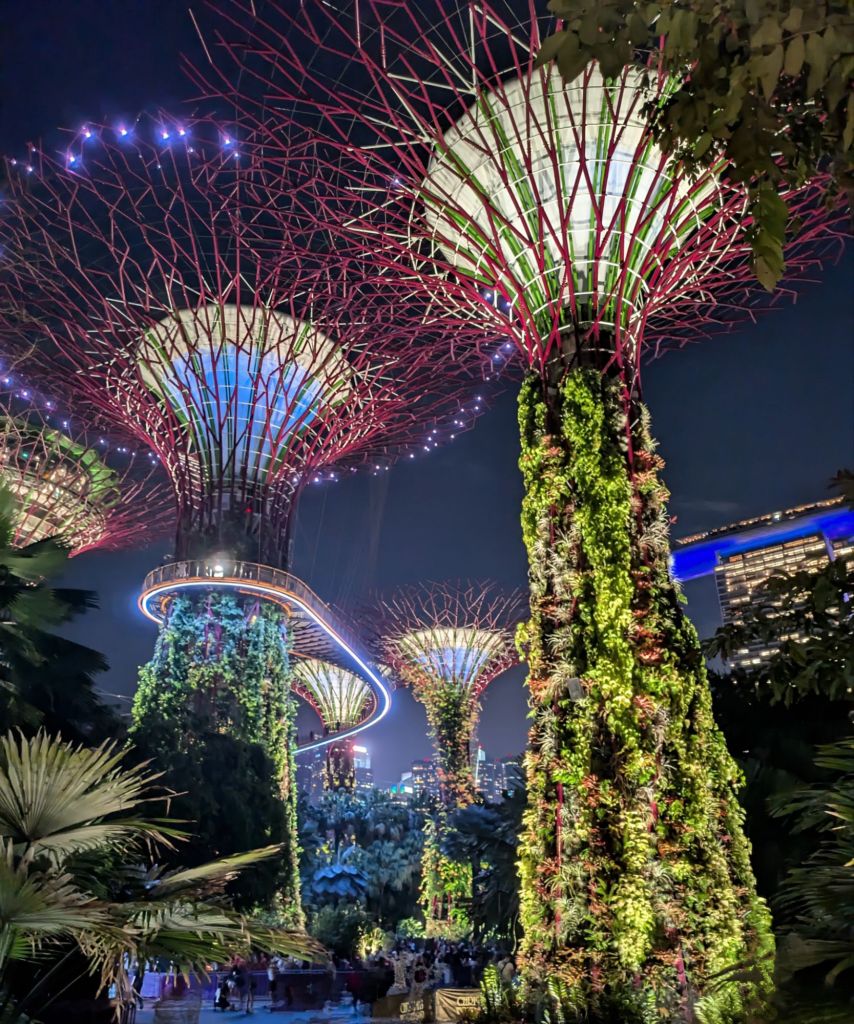
The one thing I would recommend to anyone visiting Singapore is to visit the Gardens on the Bay.  It’s a huge parkland that is free to visit and contains the iconic tree structures that resemble something from an alien planet or Jurassic park.  There is an amazing light show each evening on the hour (this was honestly my favourite thing I did), and if you’re visiting during the day you can visit the Cloud Forest, an indoor botanical garden specialising in exotic plants and orchids, as well as the Flower Dome.  You’ll need to pay in to see these as well as the viewing deck for the large tree (not to be recommended if you have a fear or heights). 

Ask anyone who has ever been to Singapore and they’ll tell you how clean it is.  Chewing gum is banned and smoking outside is banned except for designated areas with a green bin.  On more practical considerations, if you need to use your phone  lots of companies offer online Esim cards that work in several different Asian countries if you’re travelling, but ordinary sim cards can be purchased everywhere if your phone isn’t compatible with Esim cards.  While the public transport system is excellent, I used the Grab transport app a lot when travelling  in Asia (they haven’t sponsored me, but if they’d like to I’m definitely open to it).    A bit like Uber you can book pick ups, there is a translate function and you can also take a photo of where you are, which was really useful if you’re in a busy street and makes it easier for the driver to find you, as well as knowing what the fare is up front and avoiding the need to haggle to agree a fare.

Singapore is a beautiful city, but very hot and humid.  The best piece of advice I can give apart from staying well hydrated is to get up early and to see things, it’s less crowded and cooler.  You’ll also avoid the torrential thunderstorms that happened every afternoon when I visited and were pretty cool.

Ubud, Bali

Bali has something for everyone and Ubud is a great example of this.

About 1 hour, 15 minutes from the airport, the main town is always busy with legions of mopeds.  It’s not unusual to see a family of 5 on a single moped. If you’re visiting Bali, renting a moped is a popular way to get around. The law is currently changing to require foreigners to have a motor bike licence before renting a moped (largely due to tourists renting them without any experience of driving and getting in accidents).

Ubud has a beautifully carved historic palace, where you can buy tickets in the evening to see entertainment from Balinese folklore and amazingly graceful dancers. Parts of the entertainment can be a bit surreal with fantastical creatures and costumes, but well worth experiencing.   In the hub of the town there is also a large market and the surrounding streets sell all manner of clothes, shoes, jewellery, handicrafts and assorted tourist tat.   Locals also offers taxi rides on every street.  Haggling at the stalls and for taxis is expected, but as always give a fair price, as the Covid lock down hit the Balinese extremely hard.

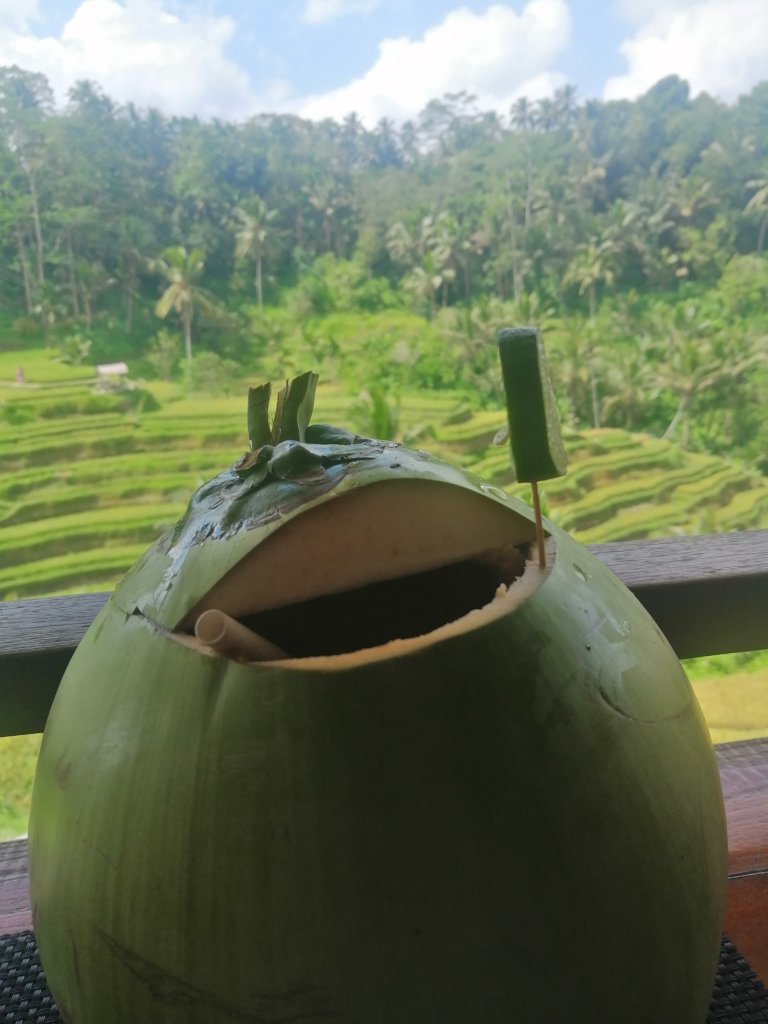
The town is a good base to visit sites like the Tegallalang rice terraces (about a 20-30 minutes taxi ride away).  If you’re an Instagram fan there are numerous back drops specially designed for the Gram.  For thrill seekers you can use specially designed swings or zip lines to traverse the deep tropical ravine.  There are also plenty of cute cafes/warungs where can enjoy lunch or a few drinks and take in the exceptional views. If you plan to visit Ubud, I need to recommend Wayan Sutika, who is an exceptional driver/tour guide, as well as being super nice and fluent in English. He and his family also have their own beautiful home stay (B & B accommodation) on the the outskirts of town. Wayan has acted as a guide/driver for us each time we visited Bali and has always shown us new and fascinating places and is extremely knowledgeable about the history of the fabulous places he’ll show you.

Ubud attracts visitors from all over the world.  Visitors range from backpackers and old hippies, through to those who enjoy the high end ultra luxury resorts on the outskirts of the town.  With such a diverse range of people you will find any type of food/drink you can think of.  Many visitors are interested in health and fitness, and there are fantastic spots all around Ubud if you want to join yoga or mediation classes.  There are also plenty of vegetarian/vegan/raw food restaurants and cafes if you enjoy clean eating.

If you feel like kicking back for an afternoon or encounter a rainy day the Pondock Library is well worth a visit. It’s a not for profit organisation that has a library and also runs classes were local artisans can teach you local crafts or skills. Classes include Balinese cookery, woodcarving, dance, music, and painting. You can join a group class or arrange for private class, and costs are very reasonable.

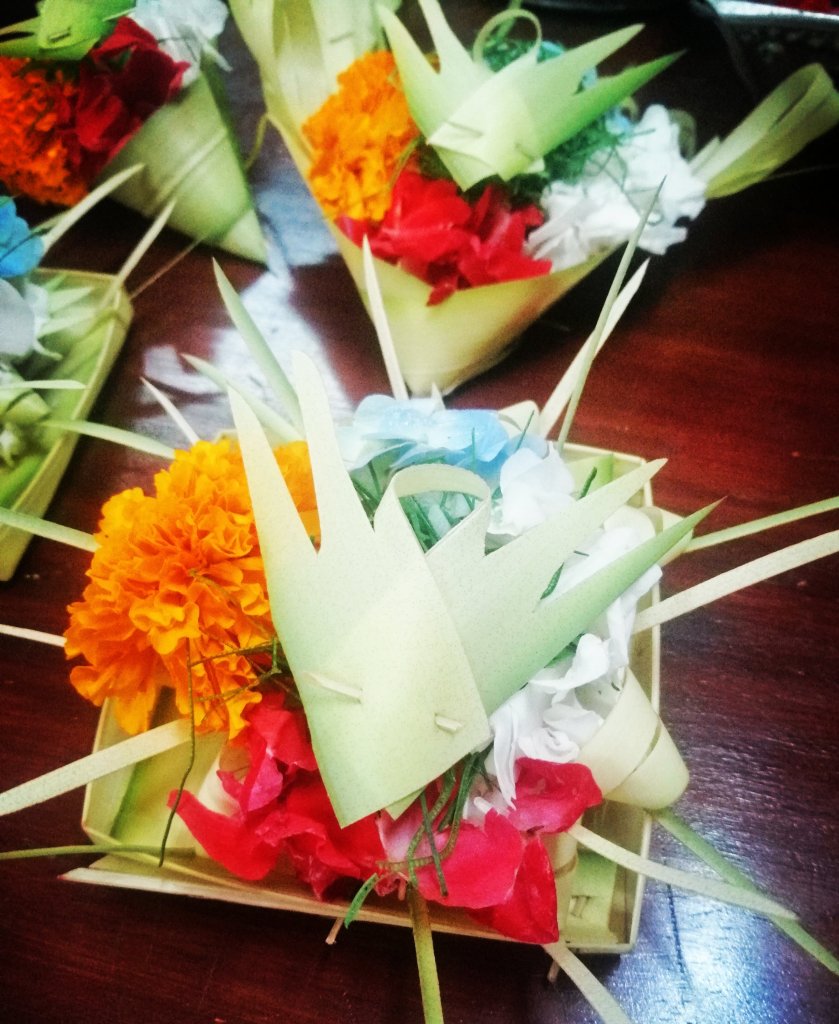
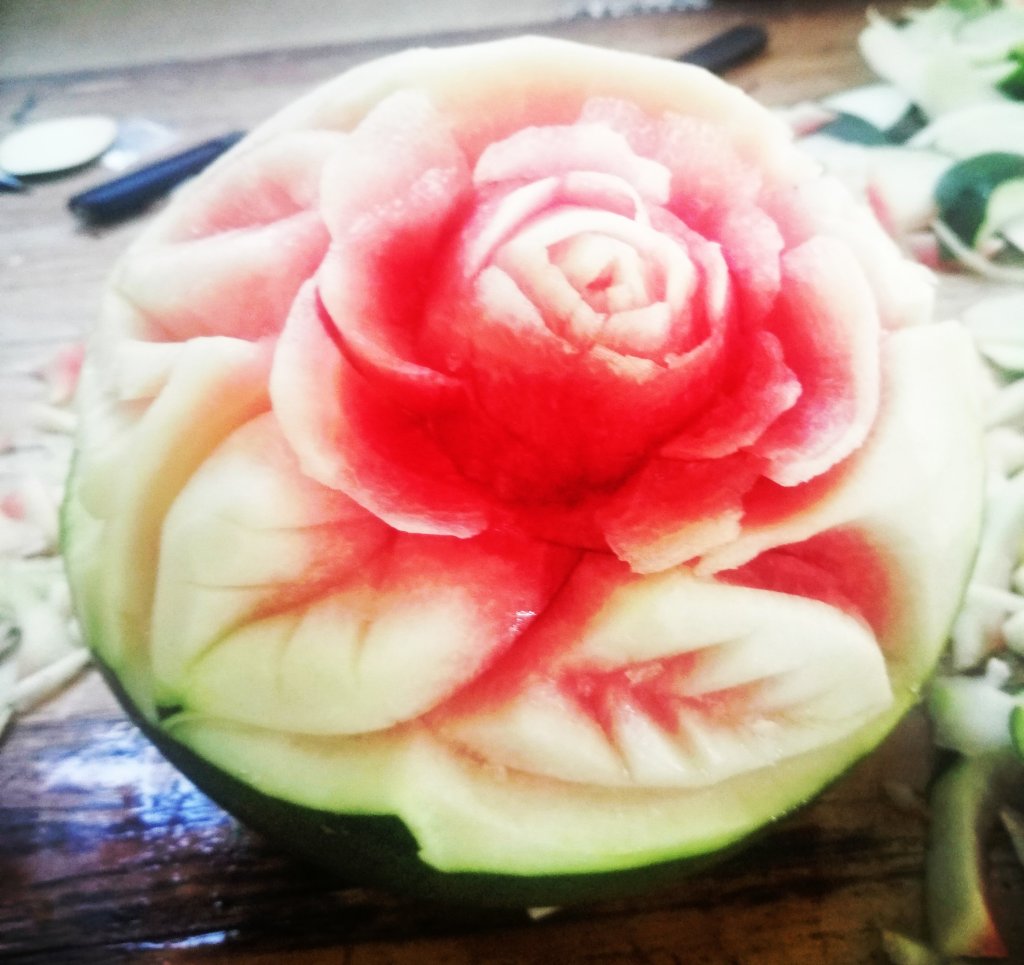
I had a couple afternoons when I just wanted to relax and learned how to make traditional offerings you’ll see everywhere you go, and another class to learn fruit carving (I was beyond of proud myself and will never leave a melon uncarved again).

I’d definitely recommend trying local Indonesian food. One of the best restaurants I’ve visited is Cafe Wayan which is very atmospheric and you can choose to sit at traditional low tables or at western tables and chairs. The place also has the prettiest bathrooms you’ll ever see and are always adorned with fresh flowers.

The other thing you’ll find around Ubud are beauty salons or spas, offering all sorts of treatments, with massages being the most popular.  Prices in salons are usually set, so I would advise against haggling.  One of the best I have ever visited is Karsa Spa. It’s about a 10 minute taxi ride from the centre of town, or if you’re feeling athletic you can go on a 40 minute trek along the Campuhan Ridge to it (It’s uphill, but not too challenging, I would advise against doing it at midday like I did).

Karsa Spa offers different packages and I would recommend getting one that includes their flower baths if you want to indulge yourself. The spa is set in beautiful gardens and you can’t help but feel bougee having your nails done sitting in a garden looking out on rice terraces.

While the town has expanded and got busier from when I last visited 4 years ago, there are still plenty of beautiful walks 5 minutes from the town centre. You can also visit the monkey forest, about a 5-10 minute from the town centre (Personally I find monkeys terrifying, but if you like them you can go visit and quite possibly have your sunglasses stolen by the cheeky little sh1ts). My one word of caution is that the Balinese have a bit of a laissez-faire attitude to health and safety. Footpaths around the town centre are often uneven so watch your step. Zebra crossings also seem to be more a suggestion than the actual law so be careful crossing busy streets.

Riga – Latvia

Low cost airlines sometimes have flights to destinations you maybe hadn’t considered before. Always up to try something new, I arrived in Riga, the capital city of Latvia and stayed in a very affordable AirB&B in the city centre. English is widely spoken and it only cost 12 euro to get from the airport using a Bolt (car ride service)

Split between and old and new city, we stayed the beautiful and compact old town.

Riga was settled 800 years ago and has been ruled by the Germans, Poles, Scandinavians and Russians during this time. I would recommend booking on to one of the walking tours, which will help get your bearings and a chance to learn more about the city and it’s inhabitants.

The city became rich as a Balkan trading hub and buildings like the Black Head House was built by the wealthy merchant guilds (so called because their patron saint was the dark skinned Egyptian Saint Maurice).

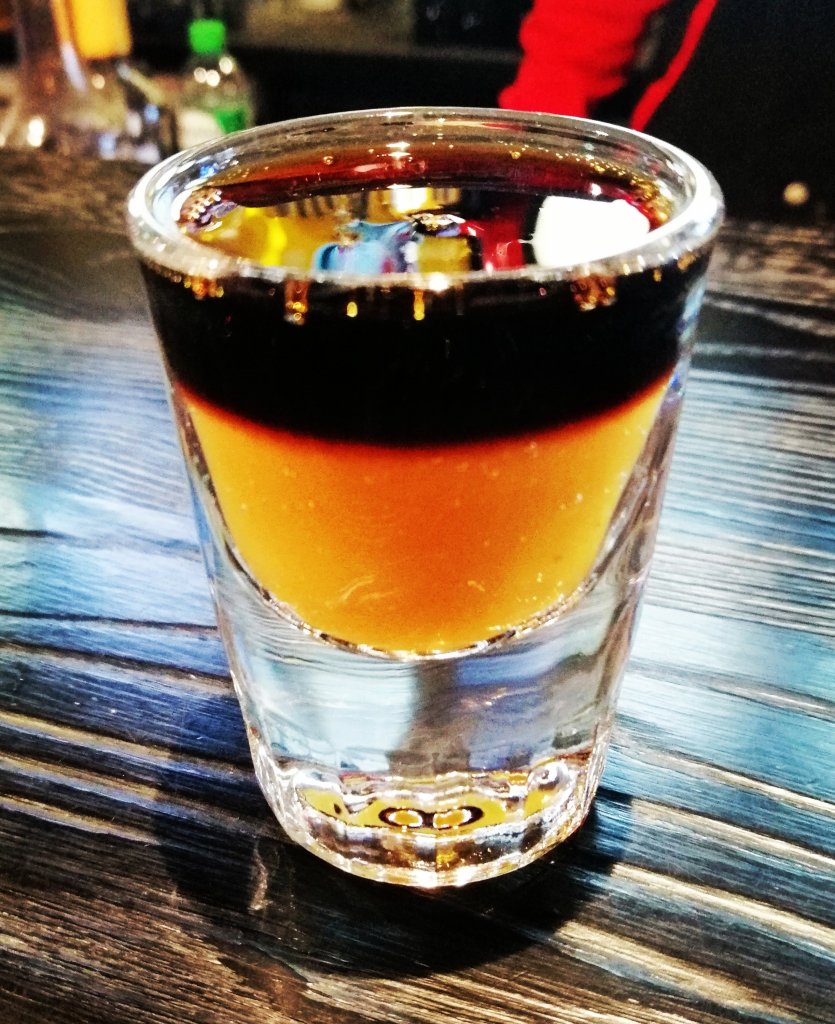
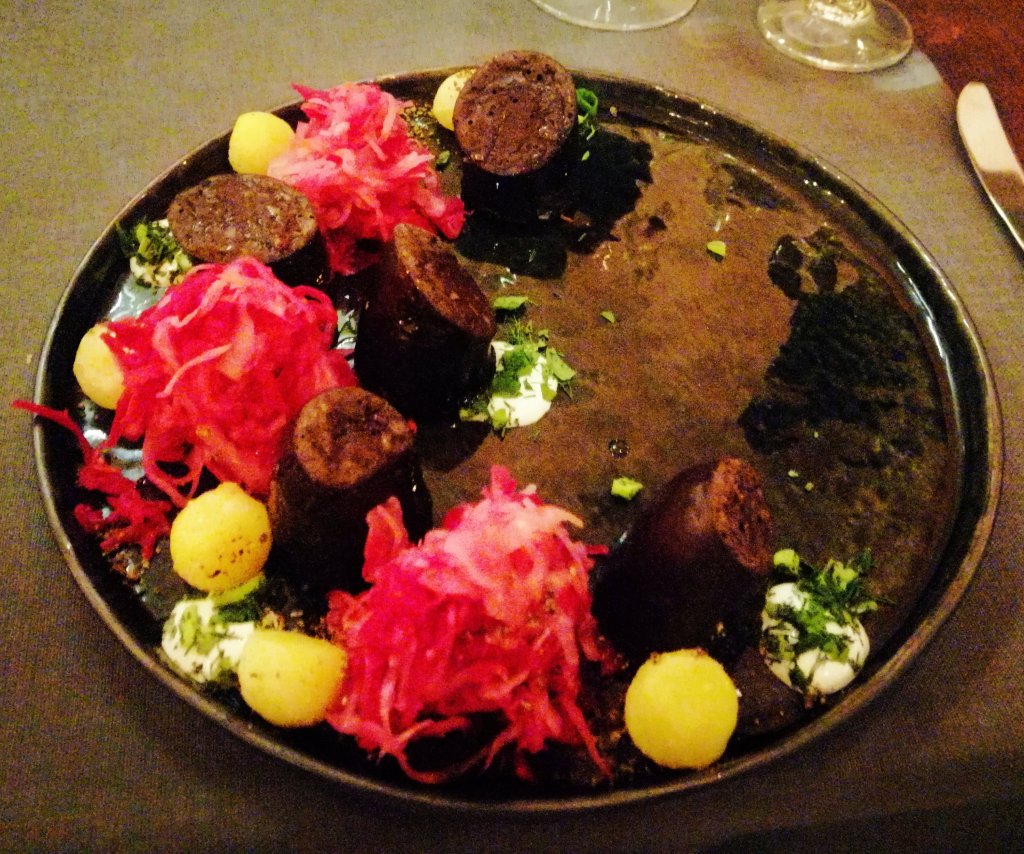
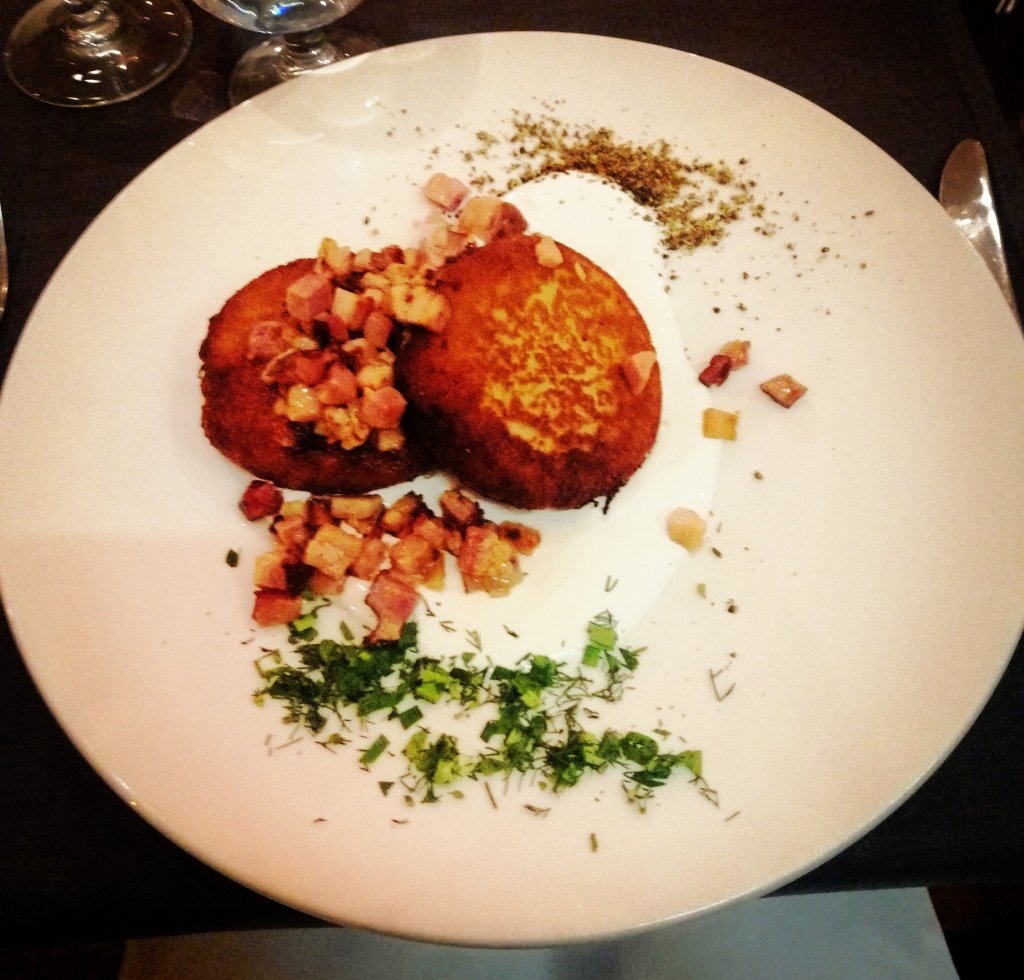
Local food, like a lot Eastern European countries is big on dark dense breads, potatoes and pork (vegetarian offerings are available but you might need to look around). The local pototo pancakes, served with creamy mushroom sauce was the perfect meal after being out in the cold sightseeing. (word of advice, the old town is mainly paved with sometimes uneven cobblestones, so be sure to wear flat thick soled shoes). The local drink you’ll find everywhere is called black balsam and was originally brewed as a medicine. It tastes like a cross between cough syrup and Jeager Meister and is 45% proof, and drank either in shots or cocktails and will blow your socks off.

For foodies Riga has a really excellent food market, selling local smoked fish, caviar, cheese, vegetables, sweets, pastries, bread and honey. It’s housed in old zeplin hangars close the river and you can also find places inside to have lunch

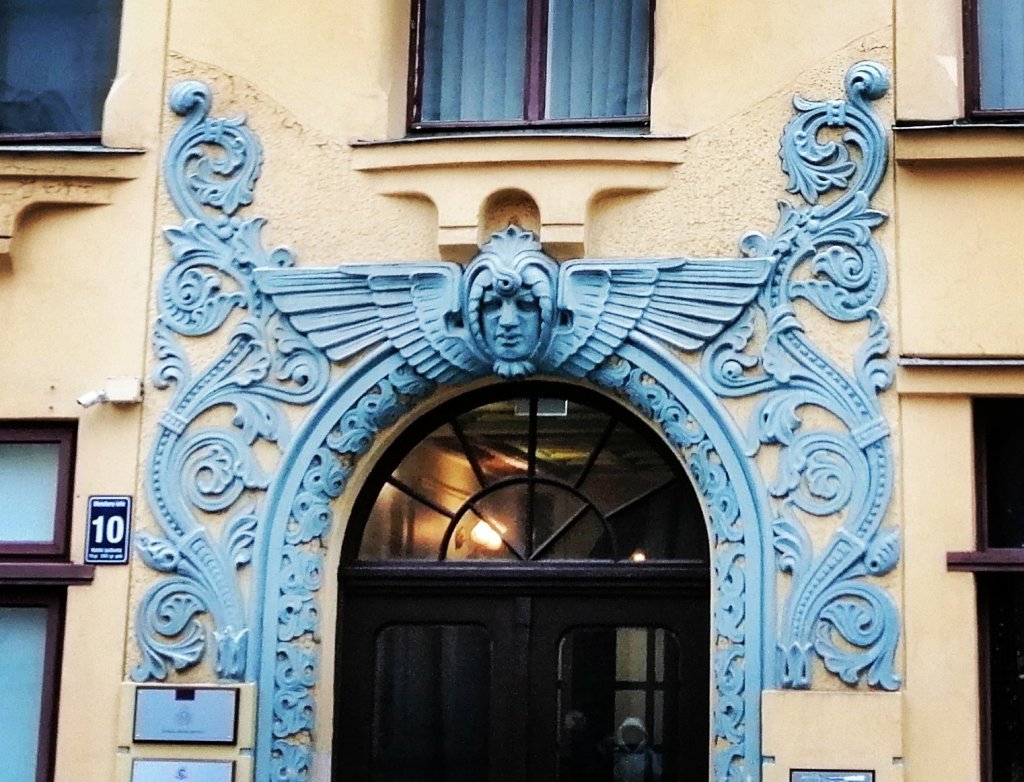
As you head to the edges of the old town you’ll some amazing Art Nouveau buildings (if you’re an architecture nerd, Riga is the place for you).

I knew very little about Riga and during conversations with some locals and visiting Lithuanians it was interesting to learn about their concerns over the current war in Ukraine. I had no idea of how badly both countries had been treated during the Stalin era. 45,000 Latvians, mainly the intelligencia and professionals were sent to Siberian gulags after the second war and the survivors were only allowed to return after Stalin’s death. Those who were able to return were kept under surveillance and forced to live 100km from main cities, meaning they could not practice their professions or gain an education.

National Library

Stalin also moved 600,000 Russians into Latvia, completely changing the demographic of the country. Currently Riga is made up of 60% people of Russian descent and 40% Latvian (in the rest of the country it’s 60% Latvian and 40% Russian). In Riga both communities live separately, living in different areas, attending separate schools etc. I got the sense that there is under lying tension between the communities.

Both the Latvians and Lithuanians spoke about how they are sending support to Ukraine and how they’re stock piling food, fuel etc, or have escape plans in place if Ukraine is completely over run by Russian forces. It was sobering to consider the knock on effect the Ukrainian conflict was having on its neighbours, and is one of the reasons why it’s important to travel and learn a bit more about the world and what’s happening in it. . Despite this I would encourage anyone to visit the city, it’s a beautiful place with great people.

Bali calling…

I use Google photos, which decided to try and depress me by sending me reminders of being in Bali.

Bali may possibly be the happiest place on earth. If sandy beaches with crystal clear waters and busy nightlife are your thing then resorts like Kuta are for you.

Personally, I prefer to go and chill out and soak up some culture.

The Balinese people are amazing, and I found them to be kind, polite and gentle. The local tradition of every home and business making small offerings each morning to give thanks is a beautiful sight, that we could all learn from. It’s like they invented mindfulness before it was co-opted by some Westerner who now makes a fortune tells us about we need to regularly show gratitude for what we have.

I prefer to travel inland to towns like Ubud. This town has a much more chilled out vibe, and is a good base travel round to visit sites like the 3 volcanoes shown above, or the breathtakingly beautiful temples.

Balinese food is fresh, delicious, and healthy. There are also plenty of Western options available if you prefer something familiar. One day cookery classes offer a great option to learn more about local ingredients, food culture, and offers the chance to meet other people (especially if you’re a solo traveler and feel like some company). You learn how to make an impressive range of dishes that you can enjoy afterwards. The local beer Bintang, is similar to Heineken and hits the spot on a hot afternoon. But a lychee Martini looking out over luscious jungle is hard to beat.

Yoga, wellbeing and spas are very popular across Bali. Prices are good, but remember that the local’s take home pay is significantly lower than in the West, so be a good guest and tip well. You will always receive good service regardless, because the Balinese are unfailingly gracious and polite, so enjoy your pampering, feeling good that you’ve recognised how hard the person pampering you works.