Cheese and Scallions Soda Bread

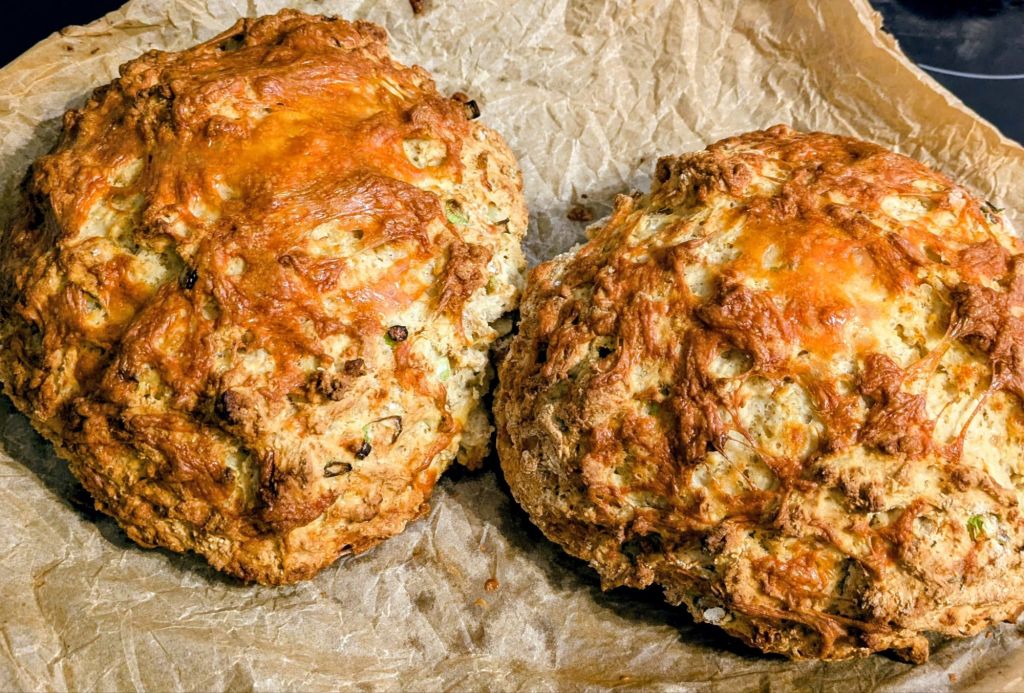
Happy Saint Patrick’s day.  To celebrate I decided to make what is one of the quickest, easiest and most delicious breads you can make.
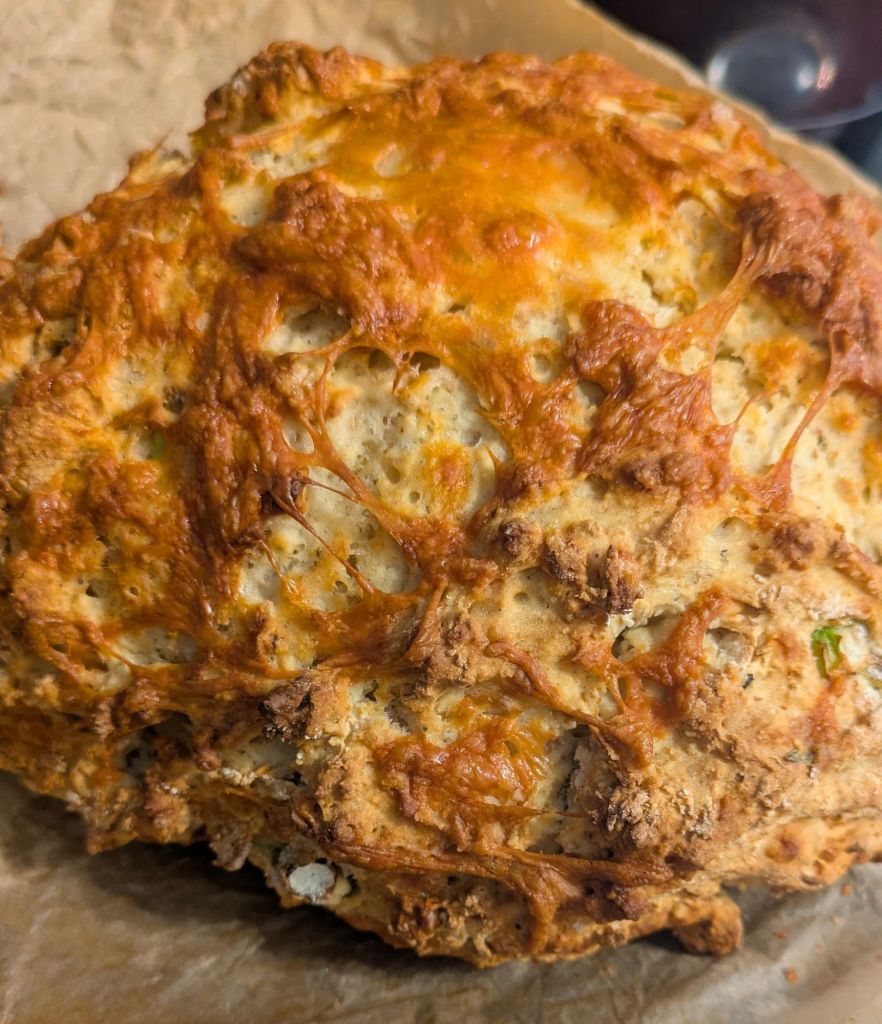
This bread has no yeast and doesn’t need to prove or be kneaded.  You can make it and have it in the oven in 5 minutes.  I’ve fancied this up with scallions (spring onions) and sharp cheddar cheese but it can still be tasty without these.
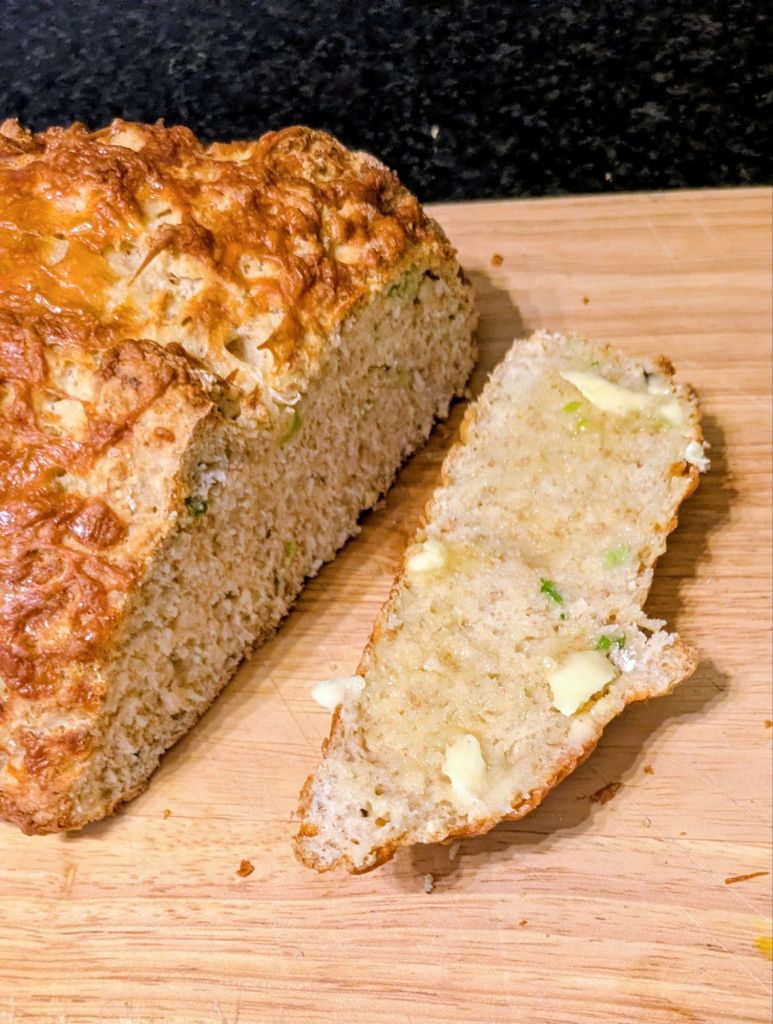
Soda bread needs to be made with butter milk (the acid causes a chemical reaction needed to make it rise).   If you don’t have this add a tablespoon of lemon juice to normal milk and leave for 10 minutes before using.

This recipe makes enough for 2 loaves (I’m getting into batch cooking as it saves time and money), and I’ll freeze one to use another time.  You halve this recipe if you prefer.

Ingredients

700 Grams Plain white flour

4-5 Scallions/Spring onions (finely chopped)

400-500ml Butter milk

100 Grams Cheddar cheese (grated)

2 Tsps Bicarbonate of soda

1 Tsp Salt

1 Tsp Thyme (optional, I had some growing in a window box and used it, but can use other herbs if you prefer)

Method

  • Preheat your oven to 220 Degrees (Celsius)
  • Line a baking sheet with grease proof paper 
  • Add all the dry ingredients into a large bowl.
  • Stir in the butter milk until you start to get a soft ball, easier to use your hands for this (it shouldn’t be dry)
  • Turn the dough onto a floured counter and devide in to two halves
  • Form each half into a ball, transfer to the lined baking sheet.  With a large knife, cut a cross into each ball (cut about one third of the depth of the dough, don’t go too deep)
  • Bake for 20-25 minutes or until the bread sounds hollow when you tap the base
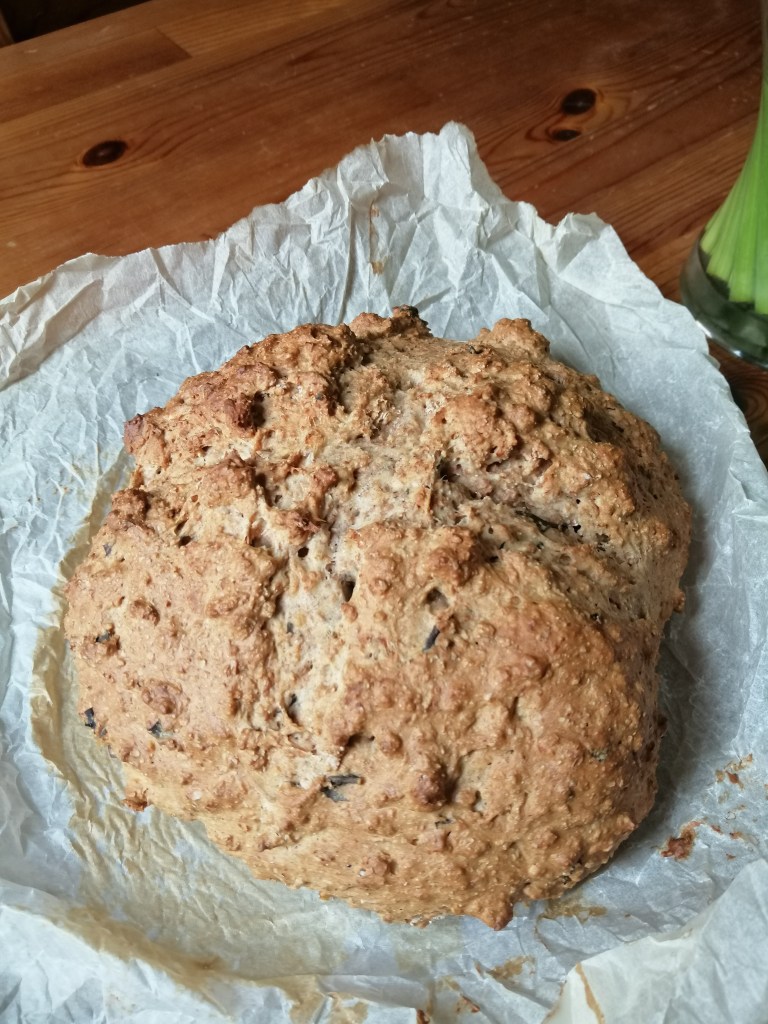
Soda Bread with Dulse

Most people from Northern Ireland will remember grandparents trying to force dulse on them as a child. If you were lucky enough to escape this and don’t know what dulse is, it’s deep purple seaweed gathered around the coast of Northern Ireland (and other places too). As a child I found it too salty, and the long strands too chewy (I wasn’t a fan).

The reason most grandparents tried to make kids eat it is because it’s amazingly good for you. It’s jam packed full of iodine, calcium, potassium, and all sorts of vitamins and anti oxidants.

I know apart from the health benefits, I’m not really selling dulse as something you can cook with. However, like the big food nerd that I am, I went on a coastal foraging day last year which was amazing, and ended with a fantastic meal cooked by Celia Sponcer (brilliant local chef). She used different seaweeds as seasoning for breads like focaccia and they were delicious, so she inspired me to try this. Dulse provides a saltiness to dishes, but also a deeper flavour that reminds you of the ozone smell you get when you’re at the coast.

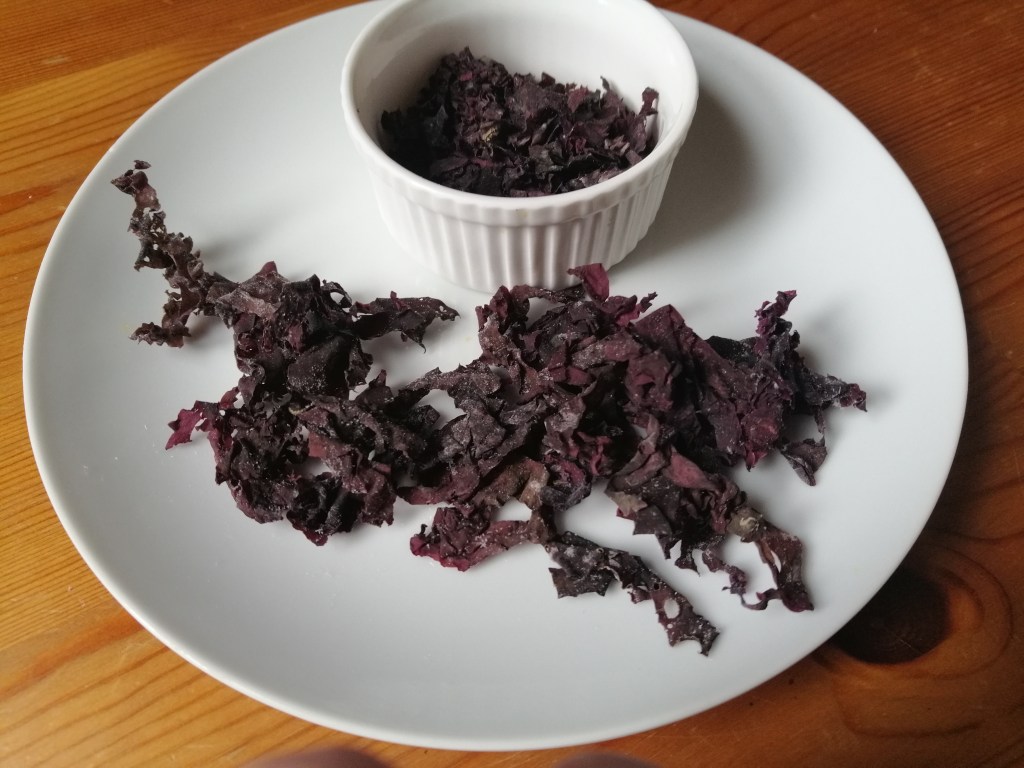
Dulse before it has been finely chopped

In Northern Ireland dulse is sold in most greengrocers, but if you aren’t able to get hold of it you can buy it online from a lot of health food retailers or online (because it’s so good for you).

This recipe calls for buttermilk, which i never have, so if you don’t have it use ordinary milk and the juice of half a lemon (the acidity from the buttermilk/lemon juice is needed to cause the chemical reaction that makes the bread rise).

If you can’t find dulse, or aren’t brave enough to try it, this still makes really delicious and healthy bread. If you’re not using dulse replace it with 1 teaspoon of salt. It’s great served with soups, but my favourite way to enjoy this is sliced with cheese.

Enjoy with butter, or cheese and chutney

Ingredients

375 Grams Wholemeal flour

75 Grams Plain flour

1 Level Tsp Bicarbonate Soda

2 Tbsp Dulse (finely chopped)

325-350 ml Buttermilk (or use ordinary milk with the juice of half a lemon added to it)

Method

  1. Add the flour, bicarbonate of soda, dulse and baking powder to bowl
  2. Stir in the butter milk/milk and lemon juice mixture until it’s s soft dough
  3. Handle as little as possible, but make the dough into a ball
  4. Turn onto a sheet of baking parchment
  5. With a sharp knife, cut a cross (about one third of the depth of the dough) across the centre of the bread
  6. Bake in an oven pre-heated to 180 degrees for 45 minutes or until the base sounds hollow when you tap it