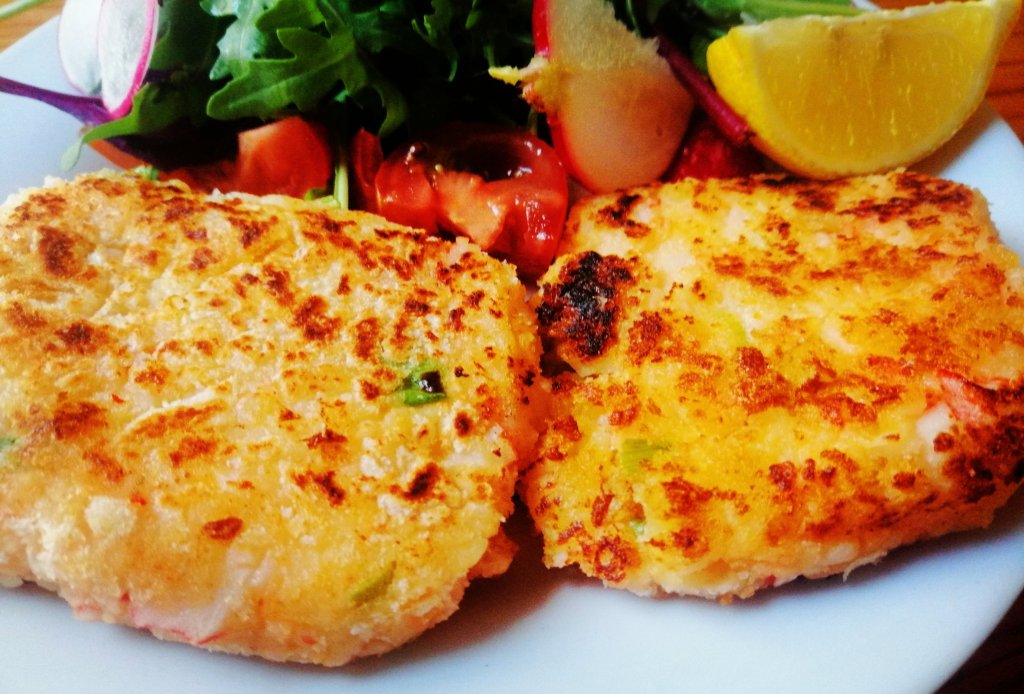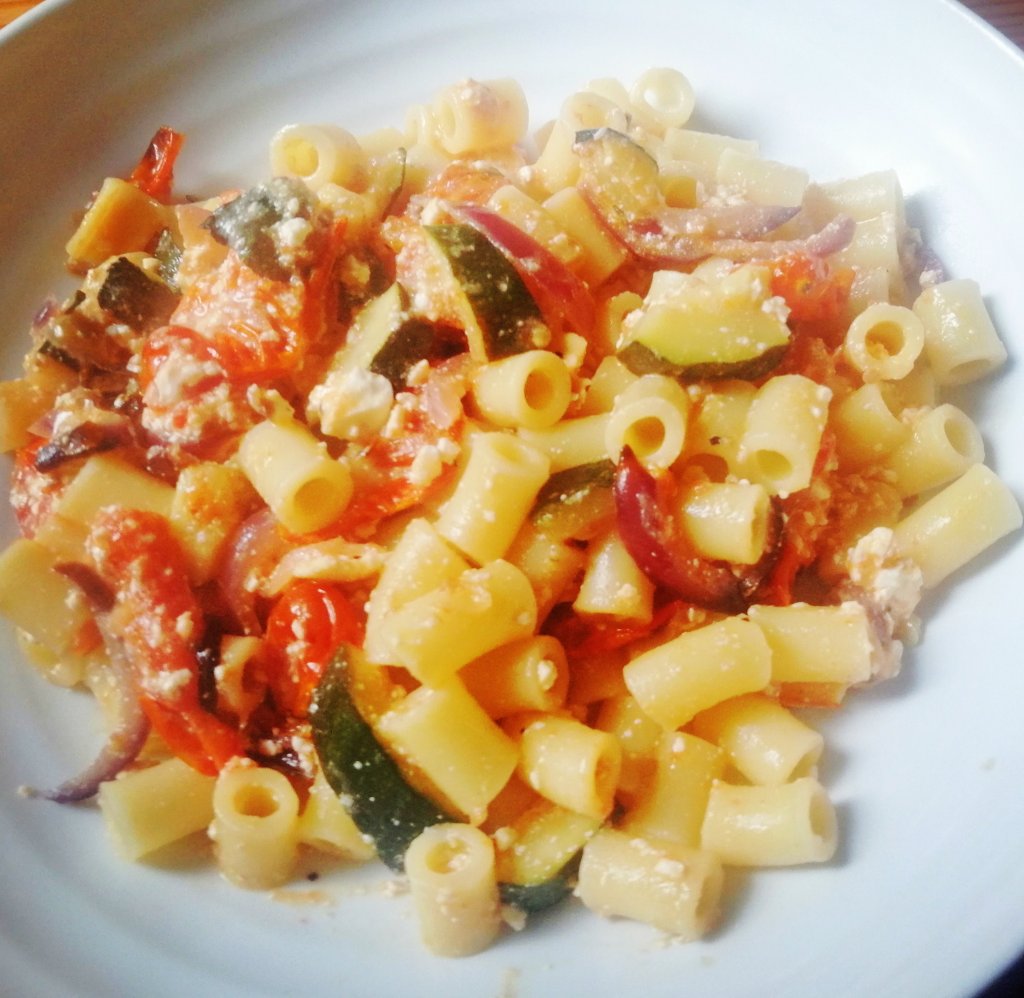
Some evenings after work you just want something quick and tasty, and this is fairly healthy too.
Any leftovers are good to take to work for lunch the next day.
Serves 4
Ingredients
Feta cheese
350 Grams Cherry tomatoes (cut in half)
1 Courgette/zucchini
1 Red onion (cut into 1/2 cm slices)
2-3 Cloves of garlic (roughly chopped)
3-4 Sprigs of thyme, 1 teaspoon of dried thyme
2-3 Tbsp Olive oil
Black pepper
Enough pasta for 4 people
Method
Preheat the oven to 180 degrees (Celsius)
Put the block of feta in a large baking dish and surround with the chopped vegetables, garlic and herbs
Drizzle the cheese and vegetables with olive oil and sprinkle with black pepper.
Bake for 30 minutes
10 minutes before the baking dish is due to come out of the oven, put your pasta on to cook (cook according to instructions on the packet)
After 30 minutes remove the dish from the oven, a mash the feta cheese with back of large spoon. Take 1/2 a cup of the starchy water the pasta was cooking in and add this to the cheese and vegetables and stir well until until this creates a creamy sauce (add more water if you think it needs it.
Drain the pasta and stir through the sauce before serving
Bali has something for everyone and Ubud is a great example of this.
About 1 hour, 15 minutes from the airport, the main town is always busy with legions of mopeds. It’s not unusual to see a family of 5 on a single moped. If you’re visiting Bali, renting a moped is a popular way to get around. The law is currently changing to require foreigners to have a motor bike licence before renting a moped (largely due to tourists renting them without any experience of driving and getting in accidents).
Ubud has a beautifully carved historic palace, where you can buy tickets in the evening to see entertainment from Balinese folklore and amazingly graceful dancers. Parts of the entertainment can be a bit surreal with fantastical creatures and costumes, but well worth experiencing. In the hub of the town there is also a large market and the surrounding streets sell all manner of clothes, shoes, jewellery, handicrafts and assorted tourist tat. Locals also offers taxi rides on every street. Haggling at the stalls and for taxis is expected, but as always give a fair price, as the Covid lock down hit the Balinese extremely hard.
The town is a good base to visit sites like the Tegallalang rice terraces (about a 20-30 minutes taxi ride away). If you’re an Instagram fan there are numerous back drops specially designed for the Gram. For thrill seekers you can use specially designed swings or zip lines to traverse the deep tropical ravine. There are also plenty of cute cafes/warungs where can enjoy lunch or a few drinks and take in the exceptional views. If you plan to visit Ubud, I need to recommend Wayan Sutika, who is an exceptional driver/tour guide, as well as being super nice and fluent in English. He and his family also have their own beautiful home stay (B & B accommodation) on the the outskirts of town. Wayan has acted as a guide/driver for us each time we visited Bali and has always shown us new and fascinating places and is extremely knowledgeable about the history of the fabulous places he’ll show you.
Ubud attracts visitors from all over the world. Visitors range from backpackers and old hippies, through to those who enjoy the high end ultra luxury resorts on the outskirts of the town. With such a diverse range of people you will find any type of food/drink you can think of. Many visitors are interested in health and fitness, and there are fantastic spots all around Ubud if you want to join yoga or mediation classes. There are also plenty of vegetarian/vegan/raw food restaurants and cafes if you enjoy clean eating.
If you feel like kicking back for an afternoon or encounter a rainy day the Pondock Library is well worth a visit. It’s a not for profit organisation that has a library and also runs classes were local artisans can teach you local crafts or skills. Classes include Balinese cookery, woodcarving, dance, music, and painting. You can join a group class or arrange for private class, and costs are very reasonable.
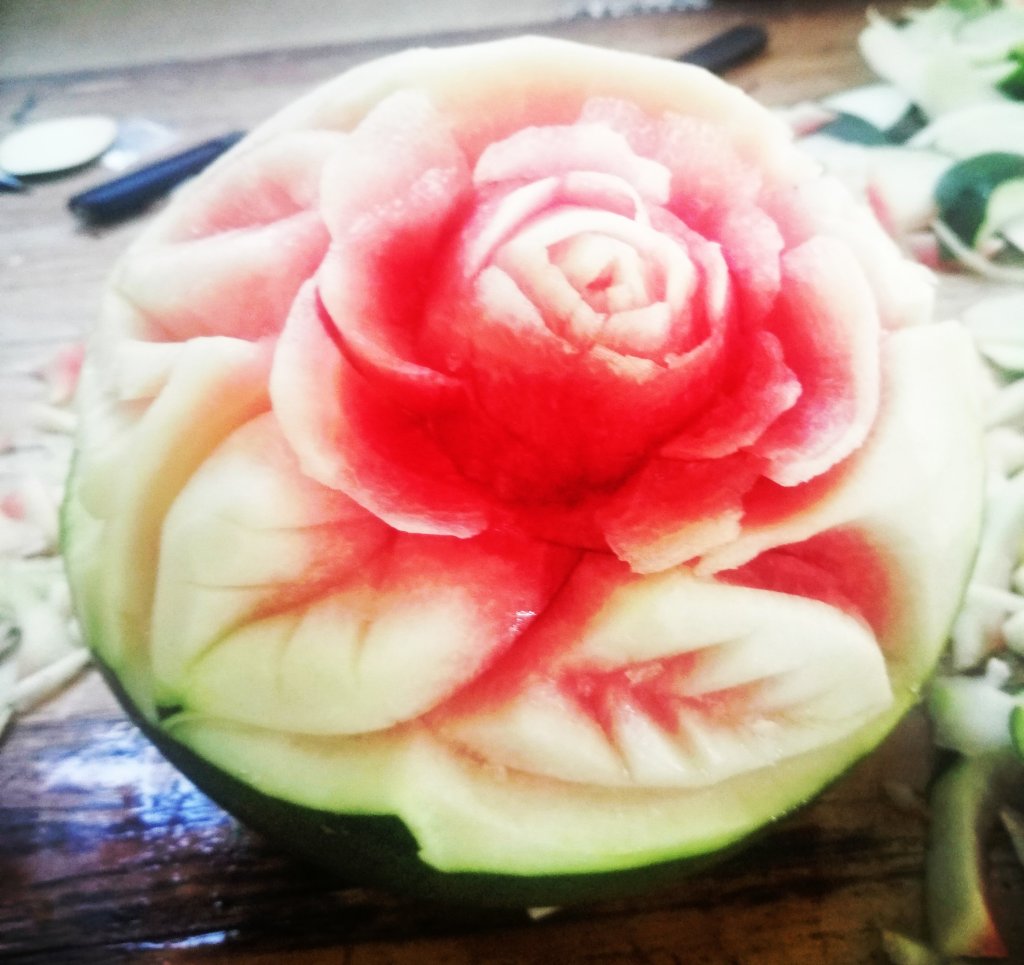
I had a couple afternoons when I just wanted to relax and learned how to make traditional offerings you’ll see everywhere you go, and another class to learn fruit carving (I was beyond of proud myself and will never leave a melon uncarved again).
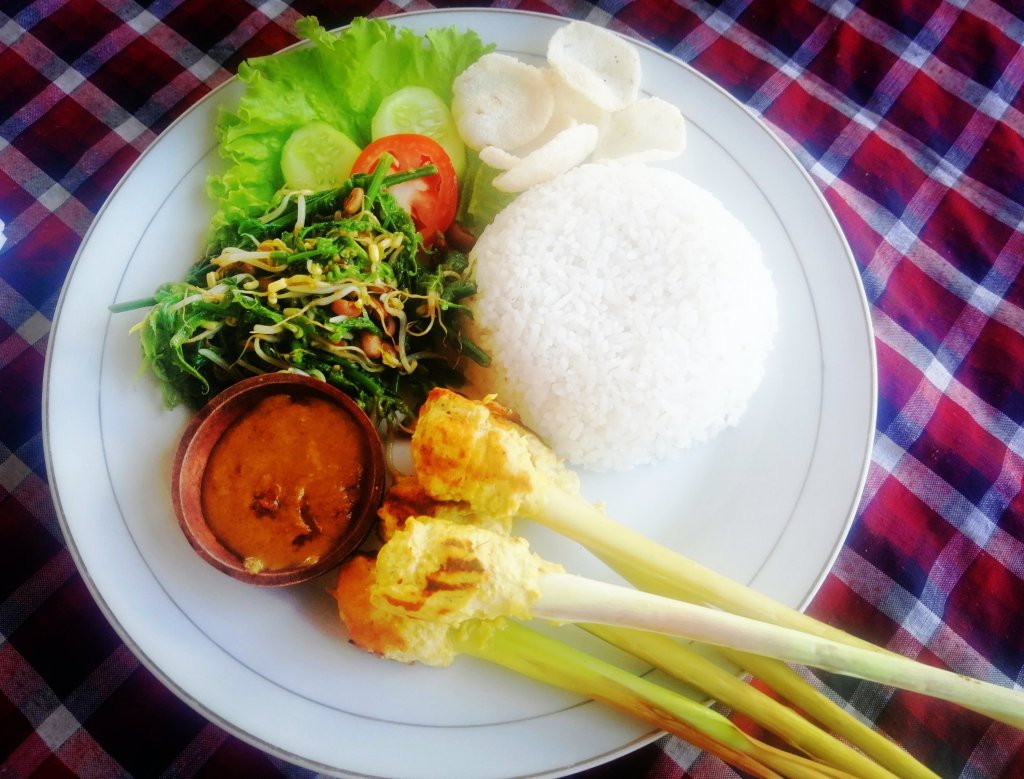
I’d definitely recommend trying local Indonesian food. One of the best restaurants I’ve visited is Cafe Wayan which is very atmospheric and you can choose to sit at traditional low tables or at western tables and chairs. The place also has the prettiest bathrooms you’ll ever see and are always adorned with fresh flowers.
The other thing you’ll find around Ubud are beauty salons or spas, offering all sorts of treatments, with massages being the most popular. Prices in salons are usually set, so I would advise against haggling. One of the best I have ever visited is Karsa Spa. It’s about a 10 minute taxi ride from the centre of town, or if you’re feeling athletic you can go on a 40 minute trek along the Campuhan Ridge to it (It’s uphill, but not too challenging, I would advise against doing it at midday like I did).
Karsa Spa offers different packages and I would recommend getting one that includes their flower baths if you want to indulge yourself. The spa is set in beautiful gardens and you can’t help but feel bougee having your nails done sitting in a garden looking out on rice terraces.
While the town has expanded and got busier from when I last visited 4 years ago, there are still plenty of beautiful walks 5 minutes from the town centre. You can also visit the monkey forest, about a 5-10 minute from the town centre (Personally I find monkeys terrifying, but if you like them you can go visit and quite possibly have your sunglasses stolen by the cheeky little sh1ts). My one word of caution is that the Balinese have a bit of a laissez-faire attitude to health and safety. Footpaths around the town centre are often uneven so watch your step. Zebra crossings also seem to be more a suggestion than the actual law so be careful crossing busy streets.
Bali is my happy place, and I was lucky enough to visit a new area in the eastern part of the island called Sideman (syd-a-min).
We arrived at night, not knowing much about the area, apart from it was still pretty rural. We stayed in the gorgeous Bebek Biru, which is a home stay (a Balinese bed and breakfast) which had two terraces to sit and enjoy the breathtaking views. Sideman village is still very traditional with a daily food market.
About 5-10 minutes walk outside the village, the area caters more to tourists and is dotted with home stays and warungs (traditional Balinese cafe/restaurant). When travelling to Bali you can only exchange money into the local currency once you are inside the country. Sideman didn’t seem to have any currency exchange shops, so remember to exchange cash before arrival, as most small local businesses still only operate with cash.
My first morning I was woken to a sensory overload of local nature. Cicadas were thrumming, water buffalo mooing, bullfrogs croaking, roosters crowing and geckos chirping, as well as the ever present drone of small vespa mopeds that both locals and tourists use to get around. Everywhere you go you’ll be treated to amazing views over the lush mountain forests and expertly manicured rice terraces.
The views from all over Sidemen are spectaclular. Bali is especially reliant on the tourist trade and the Covid lock down hit small local businesses especially hard. Many businesses have numerous side hustles, as making a living is so tough. While you may be in a home stay they can also arrange escorted tours, beauty treatments, cooking classes, moped hire etc. The locals are incredibly hard working and industrious.
I’ve always been impressed by the sweetness and generosity of spirit the Balinese have. Their warmth and kindness, after the cynicism and self centeredness of the west is disarming. This was very much the case when I visited Bukit Artha Warung. Komeng, the owner was funny and totally adorable and took great pride in making sure his guests enjoyed their food and even insisted we take an umbrella on an evening when it rained. Warung Deva also became a favourite.
Sideman is still very rural, so if you’re looking for bustling nightlife it maybe isn’t for you. However, you can still find plenty to do. The local warungs offer excellent Indonesian food and also western dishes, and can provide traditional Balinese cooking classes. If you feel like treating yourself there are any number of local beauty shops where you can enjoy all manner of beauty treatments at extremely reasonable prices. A 1 hour traditional massage costs between £6-9, if you haven’t had one of these before then you are definitely in for a treat.
If you enjoy a more active holiday, locals can arrange guided treks of the rice terraces and local mountains, white water rafting and visits to local places of interest such as beautifully decorated temples and waterfalls. Tukad Cepung waterfall is especially lovely, but it’s quite a physical climb up and down some very steep stairs, so bare this in mind if you have dodgy knees etc, when you get there its worth it, but go early to avoid the Instagrammers, posing for ages. In the last couple of years there have been issues with Instagrammers trying to do things like pose naked, or refusing to wear sarongs when visiting sacred sites. While I struggle to understand this sort of moronic behaviour, it’s important to be respectful of local culture and behave accordingly.
It’s possible to hire a guide and driver for a very fair price. We got to see stunning temples like Pura Kehen, carved with stunningly beautiful craftsmanship. A little bit of haggling might be acceptable, but please remember that the locals had nearly 3 years without any income at all, surviving only on what they could grow in the fields. So be a good guest and pay fairly for the excellent service you’ll invariably receive.
Sideman feels a bit like stepping back into a simpler time. Locals still thresh rice manually in the fields. If you live in the West and have ever complained about how hard you work, trust me, you haven’t seen hard work until you have seen rice farmers toiling in the heat. It was also refreshing to see a group of boys probably about 10 – 13 laughing and joking, out flying kites (which the Balinese love) and huddled together under a tree to try get some shade. If they were in the West, they would mostly likely be inside on a Xbox or some other screen.
If you get a chance to visit Bali and want a break from the hustle and bustle of some of the busier resorts, you’ll love Sidemen. It may be one of the most beautiful places I’ve ever visited.
I love a cinnamon roll, but being the distracted shopper that I am, I picked up ground cumin instead of cinnamon. Luckily I realised this before making the filling (let’s face it, it would be disgusting). After rifling through the cupboards I founds some ground ginger and decided to take a gamble and these actually turned out really well. So these are perfect for those of you who hate cinnamon, but feel free to substitute with cinnamon if you love it. The orange also gives a nice hint of freshness.
This is a relatively straight forward recipe based on a recipe from Sally’s Baking Addiction. Her recipe doesn’t use orange, so if its not your thing you can leave it out. Some cinnamon roll recipes involve proving the dough over night etc, I like this recipe as the dough only needs to prove once. These are delicious with a coffee but are also ideal if you making brunch and will disappear in 5 minutes.
Ingredients
For the dough
400 Grams Plain flour
50 Grams Sugar
1/2 Tsp Salt
45 Grams Butter
180 ml Milk
2 & 1/4 Tsp Dried yeast (or 1 sachet)
1 Egg
For the filling
45 Grams Butter (very soft)
Zest of 1 orange (save the rest of the orange, as you’ll be adding the juice to your icing)
65 Grams Brown Sugar
1 Tbsp Ground ginger
For the icing
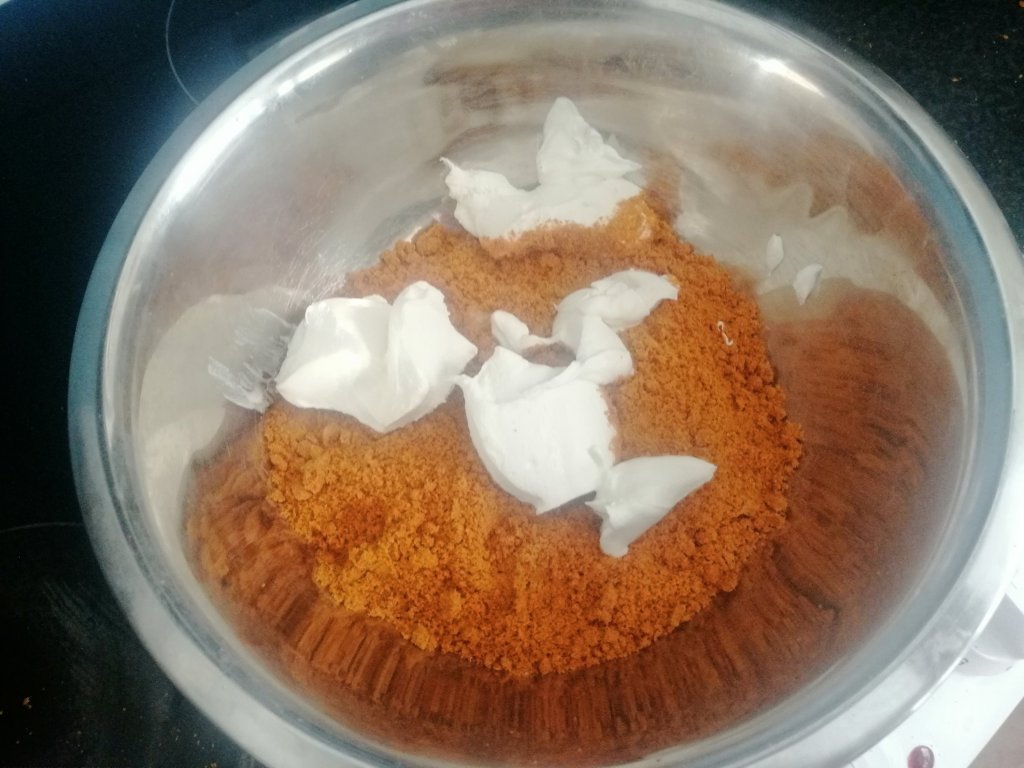
115 Grams Cream Cheese
30 Grams Butter
80 Grams Icing sugar
Juice from half the orange you zested
Makes 10-12
Method
For the dough, add the flour, sugar, and salt to a bowl and set to one side
In a bowl in the microwave, or in a pot on the stove gently melt the butter in the milk until it is warm to the touch but not hot (you will be adding yeast to this, and if it’s too hot it will kill the yeast). Whisk in the yeast until it is dissolved
Pour the milk mix and egg into to the dry ingredients and stir well until you get a soft dough. You can then use the dough hook in a stand mixer to knead the dough or turn it out onto a well floured surface and knead for 5 minutes
Lightly grease a large bowl and put the dough in the bowl and rest for 10 minutes
While the dough is resting combine the ginger, orange zest and brown sugar for the filling
Once the dough has rested, roll it out into a rectangle about 14 x 8 inch or 36 x 20 cm. Spread the softened butter for the filling evenly across the rolled out dough, and sprinkle evenly with the cinnamon mix
Roll the dough into a long log (should be 14 in or 36cm long), cut into 10-12 equal slices. Grease a large baking dish (I find metal baking dishes are best for this, but use what you have) and place the slices of dough in the dish (cut side up). Cover with a tea towel and allow to rest for 60-90 minutes in a warmish area until the dough has doubled in size
Preheat your oven to 190 degrees (Celsius), bake the rolls for 25-30 minutes (cover loosely with kitchen foil if they are browning too quickly)
To make the icing, add the ingredients to a bowl, and whisk until thoroughly combined. Spread the icing evenly over the warm rolls with a spatula. (when cooled these can be stored in an airtight box in the fridge for up to 5 days, but trust me they won’t last that long)
What I love about food is that it can transport you to different places or recall memories of places you visited and meals you enjoyed.
I visited Marrakesh six years ago and the place was an assault on the senses. The heat was like nothing I’d ever experienced, and the onslaught from traders left me a little stunned. What I did love was the food, which was too delicious and varied to cover in one post.
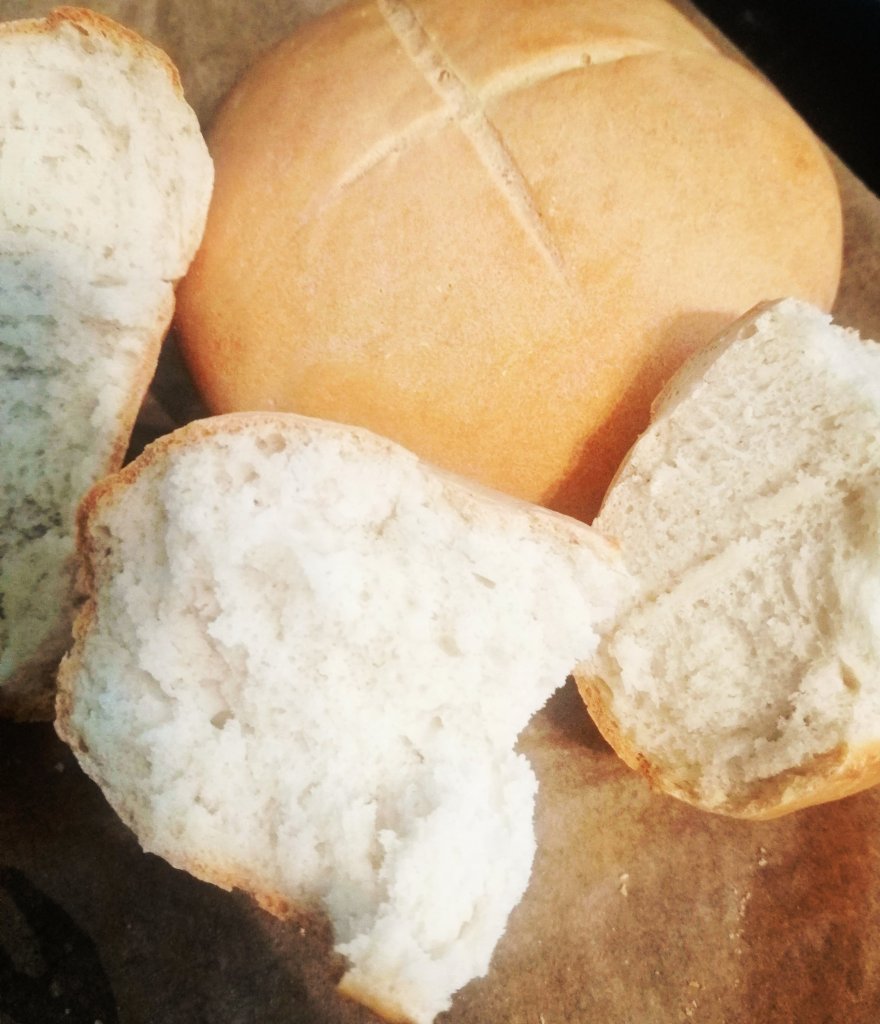
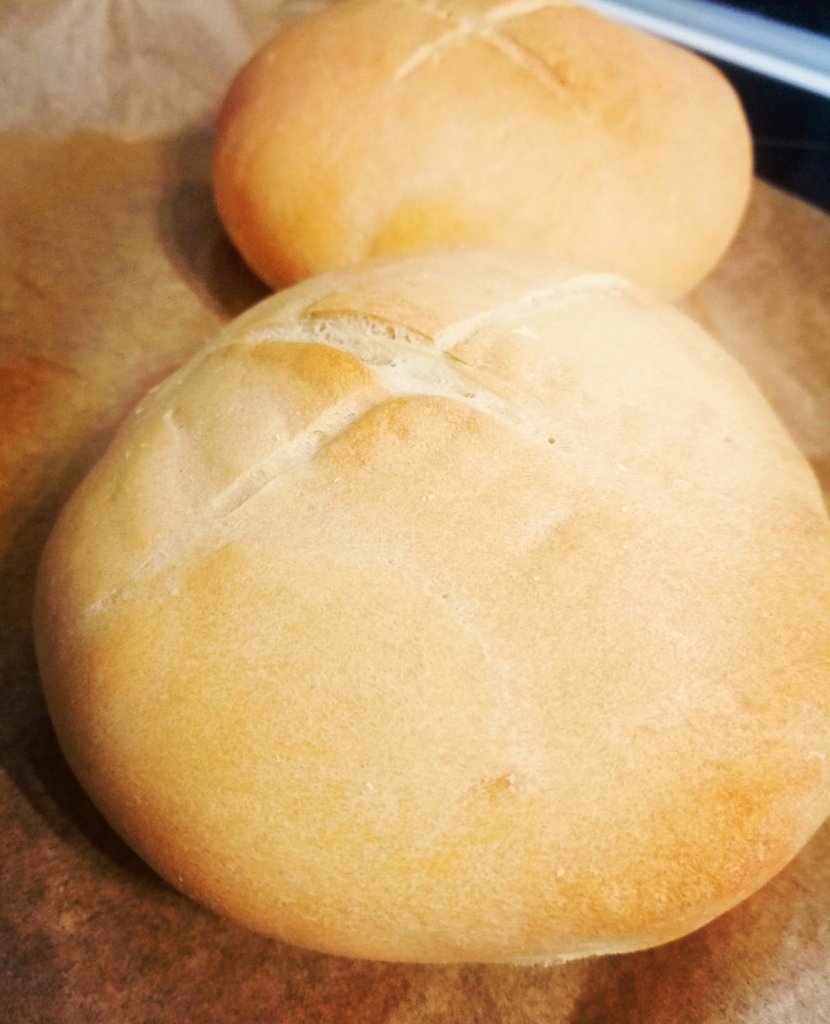
What I still crave was the delicious freshly made bread that was served everywhere. Perfect with tagines if you can’t face couscous, or great with houmous and olives, or soup for lunch.
I found a recipe from Cooking the Globe which is pretty much spot on for recreating what I remember. The ingredients and methods are straight forward. It does require a decent amount of kneading , but I don’t mind this as it allows me to burn off some stress and do some rage baking.
Ingredients
250 ml Warm Water (about skin temperature or luke warm, not too hot or it will kill the yeast)
500 Grams Plain flour (you can also use strong bread flour if this is what you have)
1 Tsp Salt
1 Tsp Sugar
2 & 1/4 Tsp or 7 Gram Sachet of dried yeast
Method
In a small bowl add the warm water, sugar and yeast and stir. Leave in a warm room for 10 minutes, it should start to foam (if it hasn’t done this your yeast is dead)
In a large bowl combine the flour and salt, then gradually add the yeast mixture and work together until you get a soft dough (you may need to use a little more or less water)
Turn onto a floured surface and knead for 10-15 minutes until smooth (this is time to let your rage baking take hold) or if you’re well adnusted and have a stand mixer ou can use the dough hook. Divide into two equal size balls, cover with a slighlty damp tea towel and leave to rest for 10 minutes
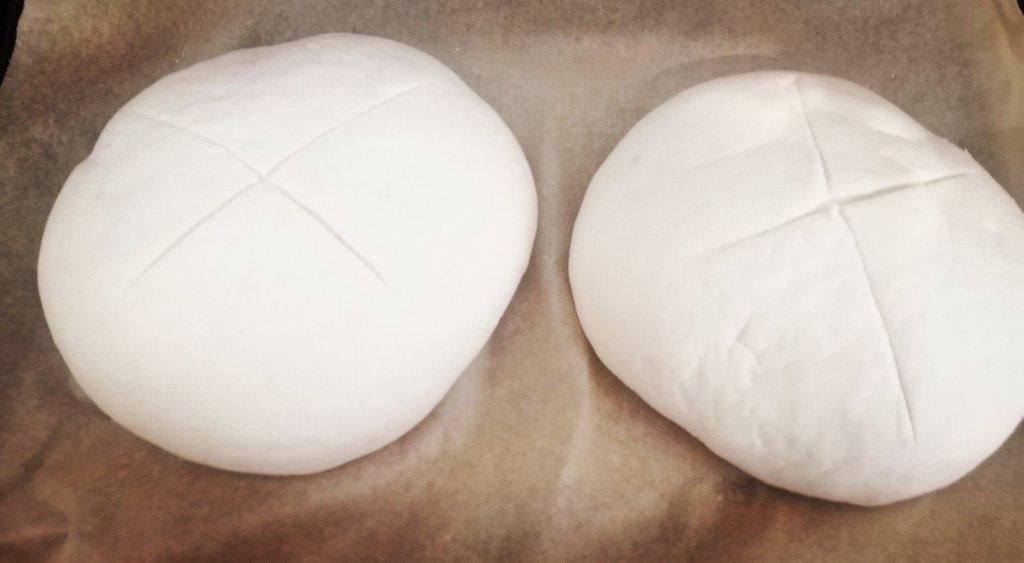
Line a baking sheet with baking parchment. Transfer the bread to the baking sheet, flatten slightly to about 2-3 cm thick, and and cover with clingfilm and leave in a warm room for an hour to rise
Pre-heat your oven to 180 degrees. Uncover the bread and knick each loaf 4-5 times with a knife if you want to be totally authentic you can sprinkle with cornmeal or semolina. I didn’t have this and it was still fine
Bake for 25 minutes or until the loaves sound hollow when you tap them
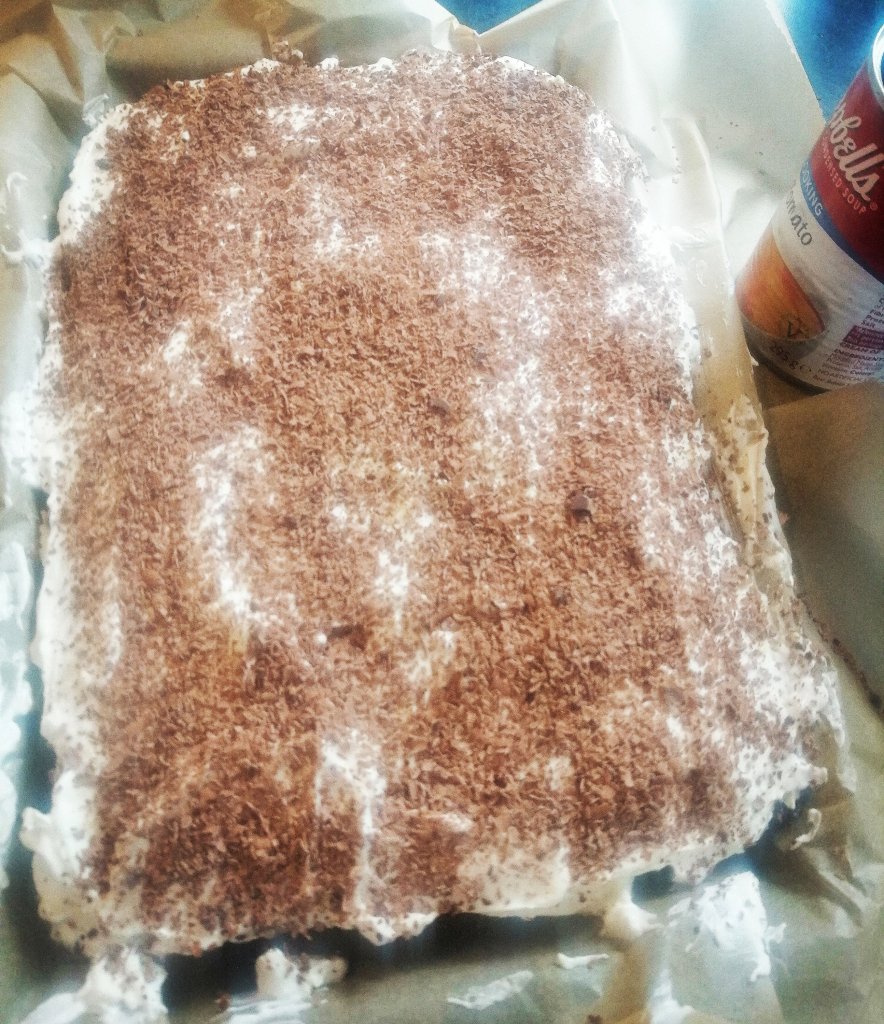
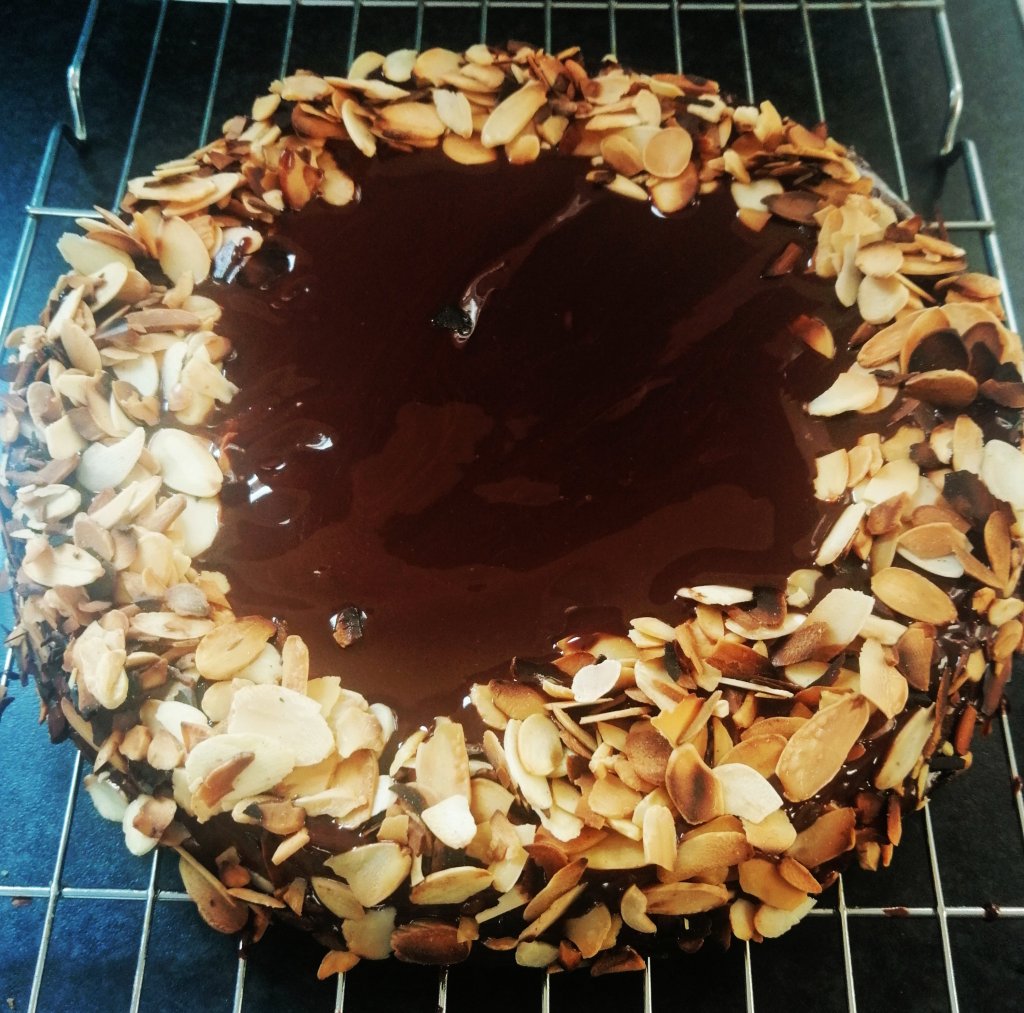
Sometimes I make things simply because the name tickles me, (blue moo pie, hummingbird cake etc).
I heard of this cake when reading about the legendary foodie and promoter of French cuisine, Julia Childs, and decided I had to make it.
This is a single layer cake, and is quite light, unlike some super rich dense chocolate cakes. It’s perfect if you don’t want something too heavy at the end of a meal, but is also delicious with a coffee if you feel the need for a little afternoon pick me up.
This recipe has some rum in it, but if you don’t do alcohol or just don’t like rum you can replace it with 2 tablespoons of strong coffee.
Serves 8
Ingredients
For the meringue
Pinch of Salt
3 Eggs (separate the yolks and whites)
1 Tbsp Sugar
For the cake
115 Grams Butter (Softened)
150 Grams Sugar
115 Grams Dark chocolate (melted)
2 Tbsp Rum, or strong black coffee
25 Grams Ground Almonds
1/4 Tsp Almond extract (optional)
60 Grams Plain Flour
For the decoration
2-3 Tbsp Flaked almonds
60 Grams Dark chocolate (melted)
60 Grams Butter (melted)
Method
Preheat your oven to 180 degree (Celsius), and prepare a 9 inch cake tin, but rubbing it with butter and then dusting the inside with a little flour (this will stop your cake sticking to the tin)
Add 3 egg whites and a pinch of salt to a bowl, and either in a stand mixer or with an electric whisk, whisk until they start to froth before adding a tablespoon of sugar. Whisk until the egg whites are firm, and you can turn the bowl upside down and the meringue stays in the bowl (be careful doing this so you don’t end up with meringue all over your floor). Set to one side
For the cake melt the 115 Grams of chocolate in the microwave, (I use blasts of 30 seconds at a time to make sure the chocolate doesn’t burn), and allow to cool slightly
In another bowl, slow whisk the butter and sugar together until it is light and fluffy, gradually add the egg yolks. Add the slightly cooled chocolate, and then the ground almonds, and flour until well mixed
Add 1/3 of the meringue mix to the chocolate mix, and mix in with a spatula, with help loosen the chocolate mix. Add the next 1/3 of the meringue mix and gently fold this into the chocolate mix with a spatula (this will help keep the air in the cake mix to keep it light. Fold in the remaining meringue mix ensuring it is thoroughly folded through before transferring to your prepared cake tin
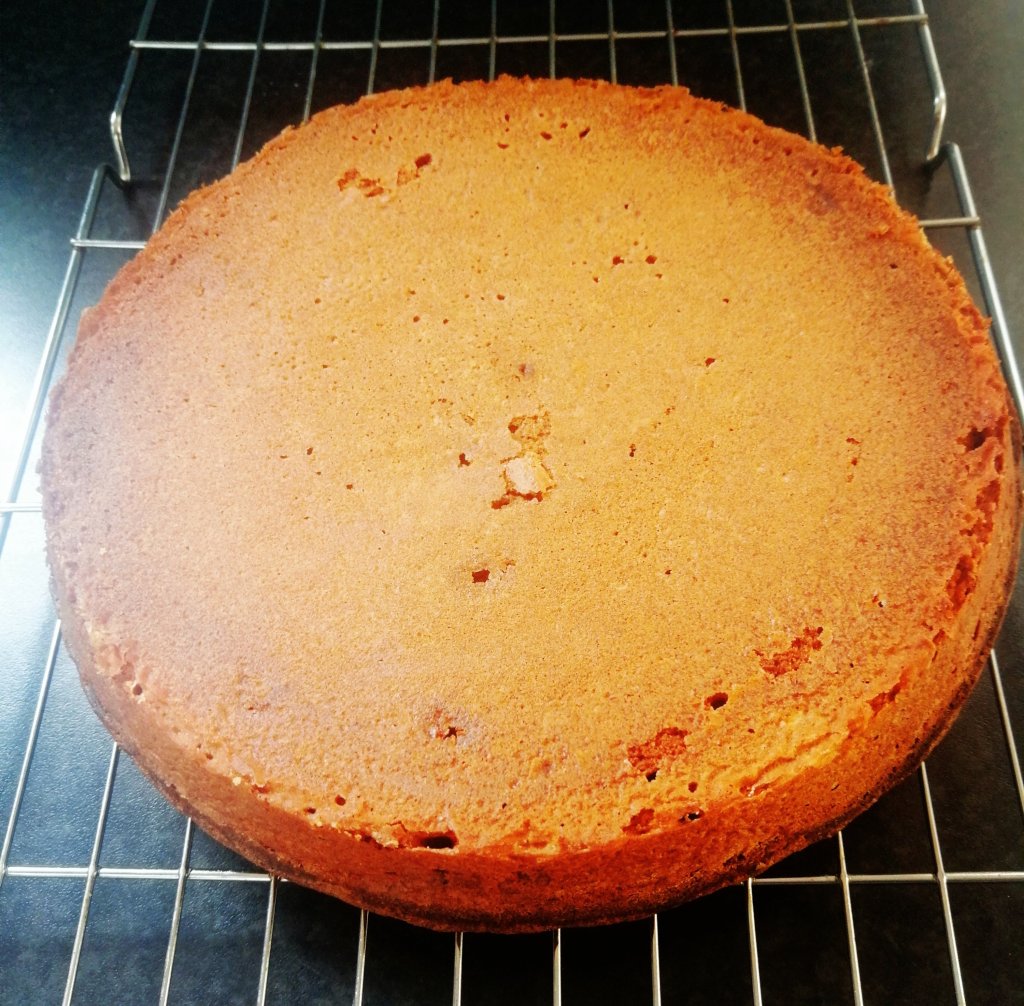
Make for 16 minutes (there should still be a little wobble in the centre) . Allow to cool in the tin for 10-15 minutes before turning out onto a wire wrack to cool
When the cake is cool, toast the flaked almonds in a dry frying pan for a couple of minutes, keep moving them around so they toast evenly and be careful as they can burn easily.
Melt the chocolate and butter for the topping in a bowl in the microwave (try blasts of 30 seconds and stir in between blasts to make sure it melts evenly), mix well when finally melted
Pour the chocolate and butter mix over the cake and spread evenly to make sure it runs down the sides evenly (I put a plate under wire wrack to catch any icing that runs of the cake and save mess)
Sprinkle the edges and sides of the cake with the toasted almonds (store in an airtight box if not eating immediately)
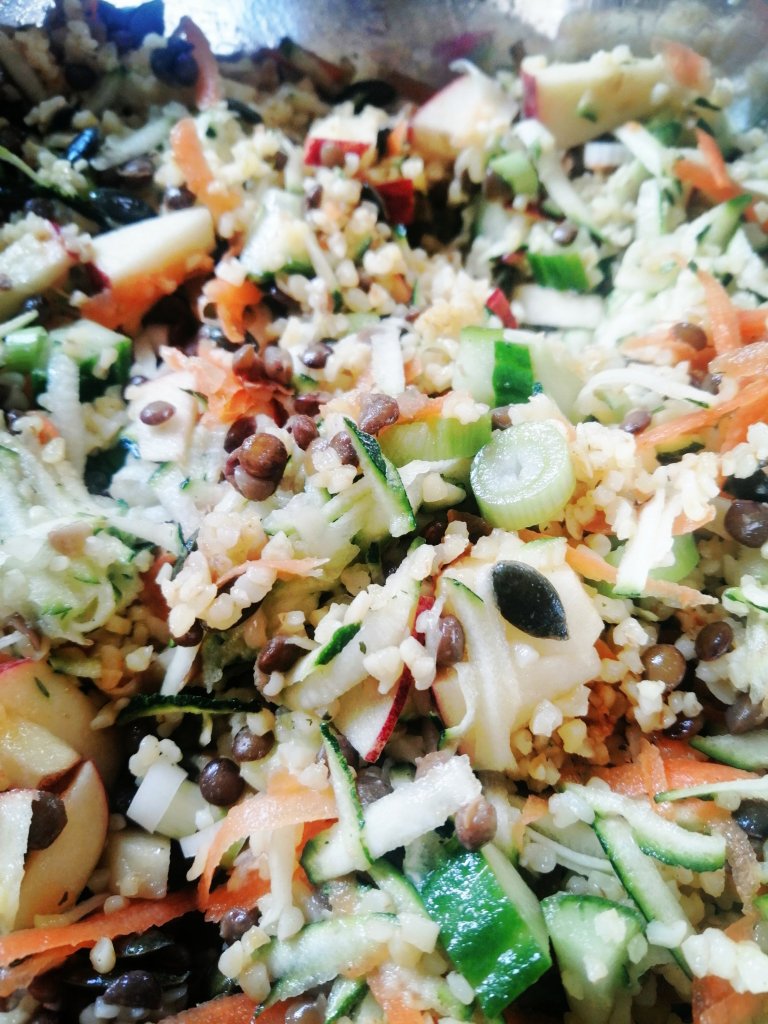
With the weather improving it’s time to eat a little lighter, and make use of all the delicious veggies that are now coming in season. If you want something healthy full of crunch and protein, then this is the perfect salad.
Ideal for lunch or as a side dish, this salad has lots of colour and fresh flavours (don’t skimp on the herbs). If you don’t already do it, window boxes full of herbs will transform how you cook and eat. The dressing has some Asian flavours for a little extra zing, but if it’s not your thing you can leave out the miso and ginger.
Ingredients
75 Grams Green lentils (dry weight, or use 1 Can of ready cooked lentils)
150 Grams Bulgar wheat, dry weight (you can also use cous cous, barley or whatever grain you prefer)
2-3 Scallions/spring onions (finely chopped)
1 Courgette /zucchini (grated)
75 Grams Cucumber (seeds removed, and chopped into 1 cm chunks)
1 Apple (chopped into 1 cm chunks and cover with some od the lemon juice for the dressing to stop it going brown)
1 Carrot (grated)
1 Handful Parsley or mint (chopped)
1 Handful Coriander (chopped)
I Tbsp Pumpkin seeds
Salt and pepper
Dressing
1 Lemon (juiced)
2-3 Tbsp Oil
1 Tbsp Grated ginger
1 Tsp Miso paste
Method
Cook the lentils and Bulgar wheat according to the instructions on he packaging, set aside and allow to cool. If you are using pre cooked lentil just drain them
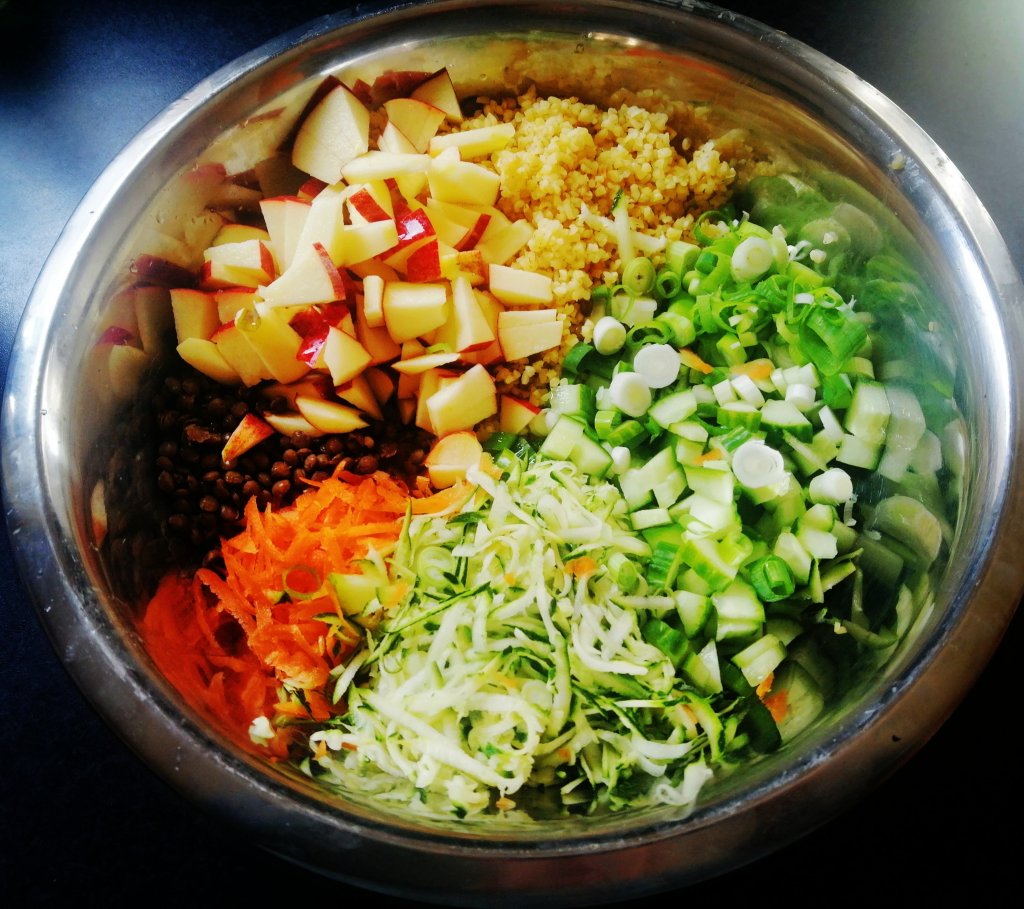
Combine all the salad ingredients in a large bowl.
In a small bowl, mix all the dressing ingredients together and drizzle over the salad ingredients
Mix well and add salt pepper if you think it needs it.
This pie is very satisfying but still quite light and a good way to get your daily dose of veggies.
I use frozen spinach, because it’s cheaper and a kilo of fresh spinach will take up half your kitchen, make sure to squeeze out as much water as possible so the pie won’t be soggy. Fresh herbs add flavour, and while dill is traditionally used, I used parsley and mint which are also used in some parts of Greece.
Filo pastry can be bought in most larger super markets. Make sure to cover the pastry with a slightly damp tea towel to stop it drying out when you are making the pie.
The pie can be eaten hot or cold and can live in your fridge for 2-3 days. It’s great as a lunch dish served with some salad or as a side dish.
Ingredients
1kg Frozen spinach (defrosted, and all excess liquid squeezed out)
3 eggs
Handful of finely chopped parsley and mint
250 Grams Filo pastry
200 Grams Feta style cheese (crumbled)
1 Leek or bunch of scallions/spring onions (finely chopped)
1 Tbsp Oil
25 Grams Butter (melted)
Salt and pepper (to taste)
2 Tbsp Sesame seeds (optional)
Method
Preheat the oven to 180 degrees (Celsius)
In a large pan, heat the oil over a medium heat and fry the leek until soft. Set to one side and allow to cool
Add the drained spinach to a large bowl and loosen up with a fork. Stir in the eggs, feta, herbs leeks and seasoning. Stir until combined
Grease a 6 x 9 in baking tin and line with sheets of filo pastry, brush each sheet lightly with butter before topping with another sheet (lay 5-6 sheets of filo pastry as a base)
When the tray is lined, spread the spinach mixture evenly across the base. Fold in any overlapping pastry and top the pie with the leftover sheets of pastry (brush each sheet lightly with butter before topping with the next.
Sprinkle with sesame seeds, and bake in the oven for 25-30 minutes until brown and crispy
Trying to get away from winter’s stodgy comfort food, doesn’t mean giving up on flavour.
This salad is jam packed with flavour and texture and takes 10-15 minutes to knock up. It’s also gluten free and vegan and makes a great lunch box filler if you’re fed up with sandwiches.
Ingredients
500 Grams Dried rice noodles
1/4 Red cabbage (finely sliced)
3 Scallions/spring onions (finely sliced)
2 Small carrots (grated)
1 Red pepper (finely sliced)
2 Tbsp Coriander (finely chopped)
2 Tbsp Mint (finely chopped)
Dressing
2-3 Tbsp Peanut butter
1 Tbsp Sesame oil
1 Tbsp Soy sauce
1 Tbsp Grated ginger
1 Tsp Maple syrup or Honey if you’re not vegan
1 Tsp Chilli flakes
1 Tbsp White wine vinegar or lemon juice
Topping (option)
2 Tbsp Pumpkin seeds
100 Grams Cashew nuts/peanuts (toasted)
Method
Toast the nuts in a hot frying pan and set to one side and allow to cool.
Cook the rice noodles according to the instructions on the packet. Drain the noodles and add to a bowl of ice water to stop them over cooking.
Add all the dressing ingredients to a bowl and mix well. You might need to add some hot water to loosen up the dressing if its too thick.
Drain the cold noodles and add to a large bowl. Stir in the vegetables and dressing and mix well.
A good sausage roll is one of my many weaknesses and when I was making some some for a work party I realized I work with quite a few vegetarians and would need to have something for them.
Only psychopaths make their own puff pastry, so when you are buying your pastry check that its vegetarian/vegan friendly (most are), unless you want to use the “all butter” versions but this would obviously not be suitable for vegans.
Pastry glazes for vegan dishes obviously can’t use the traditional egg or milk glazes but plant milk or coconut oil can work well, I used some onion seeds as well to add some interest.
While these are mushrooms flavoured, I also included some lentils to add some meatiness to the texture as well as some protein and some miso paste to give it that umami flavour that some vegan dishes lack.
Ingredients
1 x 375 Gram Sheet ready rolled puff pastry
300 Grams Button mushrooms (finely chopped)
25 Grams Dried Porcini mushrooms
100 Grams Breadcrumbs
1 Tsp Miso paste
200 Grams Tinned lentils (or cooked green lentils)
1 Leek (finely chopped)
1 Tablespoon Oil
Salt and pepper to taste
Plank milk/Coconut oil to brush the pastry with
2 Tsp Onion or sesame seeds to decorate (optional)
Method
Put the dried porcini mushrooms in a bowl with 100 Mil boiling water and allow to soak for at least 15 minutes
In a large frying pan over a medium heat, and the oil and when hot add the mushrooms and leek. Cook for 10-15 minutes stirring occasionally (don’t move the mushrooms about too much or they will become watery)
When cooked add the lentils, miso, and porcini mushrooms (including the water they were soaking), cook for a further 5-10 minutes until most of the liquid has evaporated, and then add the breadcrumbs and stir well. Remove from the heat and allow the mixture to cool
Pre-heat your oven to 180 degrees (Celsius) and line a baking sheet with baking parchment.
Roll the pastry out on a lightly floured surface to prevent sticking and cut the pastry sheet in half lengthways.
Spoon the cooled mushroom mix down the centre of each strip of pastry leaving enough space for when you roll the edges together. Wet the long edges of the pastry and gently bring the edges together to slightly overlap each other then press together
Turn the side where pastry meet to the bottom and brush with your glaze before sprinkling with seeds, if you are using them.
With a sharp knife cut the pastry sausage into 3-4 cm slices before transferring onto the lined baking sheet.